Connect with us

Sports

QS 88 Provides a Smooth and Reliable Online Entertainment Experience

Published

on

QS 88 Provides a Smooth

As digital entertainment continues to attract a growing audience, users value platforms that combine convenience, performance, and accessibility. QS 88 offers a modern environment with an intuitive interface, allowing users to explore its features effortlessly. Whether accessed from a desktop computer, tablet, or smartphone, the platform is designed to provide a reliable and enjoyable experience while maintaining responsive performance across multiple devices.

Modern Design with Simple Navigation

The platform features a clean layout that helps users move between different sections quickly and efficiently. Thoughtful organization and responsive functionality make browsing straightforward, ensuring that both new and returning visitors can enjoy a seamless digital experience. The intuitive interface makes it easy to locate different entertainment categories without unnecessary complexity.

Convenient Transactions Through Rút Tiền QS88

Users can conveniently manage account withdrawals through Rút Tiền QS88, where the withdrawal process is designed for simplicity and efficiency. The responsive interface helps users navigate transaction options quickly while providing a smooth experience across desktop computers, tablets, and smartphones. Its organized structure allows visitors to complete withdrawal requests comfortably while maintaining easy access to the platform’s entertainment features.

Optimized Performance Across Devices

QS 88 is built to perform consistently across multiple devices, delivering fast loading speeds and responsive navigation. Regular platform updates help improve stability and usability, allowing users to enjoy uninterrupted access wherever they choose to connect. Whether browsing from home or while traveling, visitors can expect reliable performance and a consistent digital experience.

A Dependable Platform for Modern Entertainment

By focusing on user convenience, reliable performance, and continuous improvements, QS 88 continues to establish itself as a trusted online entertainment platform. Its combination of accessibility, modern design, and responsive technology makes it an excellent choice for users seeking a high-quality digital entertainment experience across a variety of devices.

Continue Reading
Click to comment

Leave a Reply

Your email address will not be published. Required fields are marked *

Sports

How QS88 Creates an Engaging Online Gaming Experience

Published

on

QS88

The online gaming industry continues to evolve with platforms that focus on convenience, entertainment, and accessibility. QS88 has attracted a growing community of players by offering a modern gaming environment designed to provide a smooth and enjoyable experience. With support for both desktop and mobile devices, the platform allows users to access their favorite games whenever and wherever they choose.

One of the defining features of nạp tiền QS88 is its diverse range of gaming categories. Players can enjoy slot-style games, traditional table games, and interactive live gaming experiences that cater to different interests and playing preferences. The platform is regularly updated with fresh content, helping to keep the gaming experience exciting while encouraging users to explore new entertainment options.

Another reason many players appreciate QS88 is its emphasis on usability and dependable performance. The platform offers responsive navigation, fast loading speeds, and secure account management, creating an environment where users can focus on entertainment without unnecessary interruptions. Its intuitive design also makes it simple for newcomers to navigate while providing experienced players with quick access to their preferred games.

As online gaming continues to grow, QS88 remains a strong choice for players looking for variety, convenience, and reliable performance. By combining an extensive game selection with a modern interface and consistent functionality, the platform delivers an enjoyable online gaming experience for a wide range of users.

Continue Reading

Sports

Nghệ Thuật Sắp Xếp Lịch Trình Diễn Ra Các Giải Đấu Bóng Đá Quốc Tế Và Bài Toán Bản Quyền Truyền Thông
Published

on

ThapcamTV

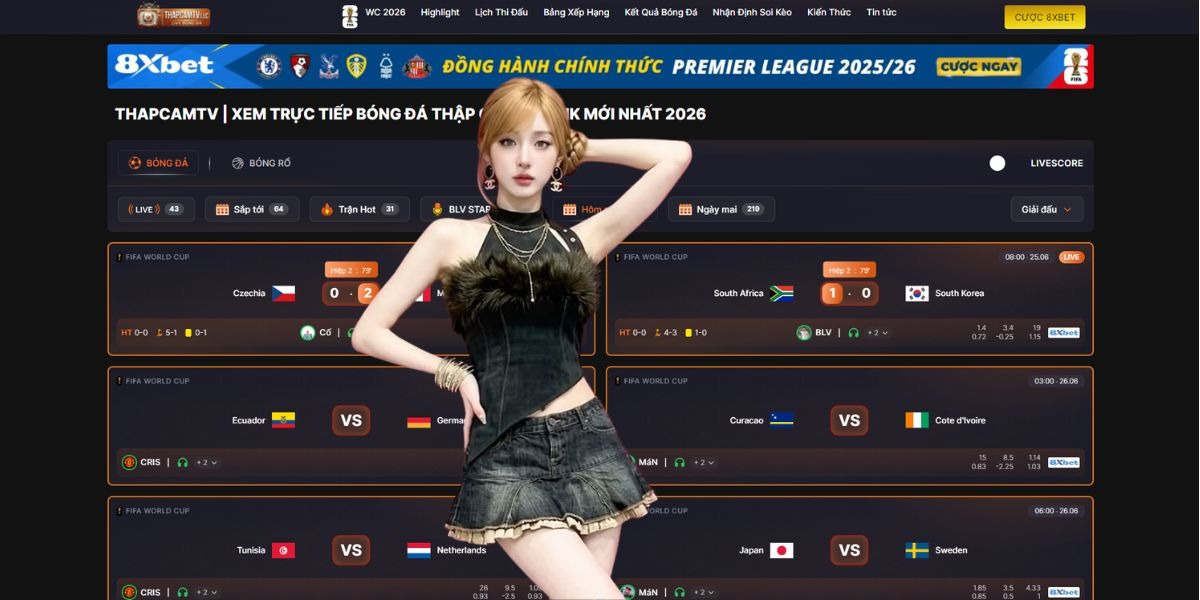
Hệ thống thapcam tv mang đến chuyên mục Lịch thi đấu ThapcamTV chính xác giúp khán giả chủ động sắp xếp thời gian theo dõi các trận cầu đỉnh cao. Để một giải đấu thể thao diễn ra suôn mượt và thu hút hàng triệu người xem trên toàn thế giới, ban tổ chức phải giải quyết một bài toán vô cùng phức tạp về mặt logistics và xếp lịch tổng thể. Việc phân bổ thời gian thi đấu không chỉ đơn thuần là chọn ngày giờ ngẫu nhiên, mà đó là một quy trình tính toán khoa học chịu sự tác động mạnh mẽ từ các yếu tố bản quyền truyền hình, lợi ích thương mại của các câu lạc bộ, sức khỏe của các cầu thủ và cả yếu tố khí hậu địa phương của từng quốc gia đăng cai.

Nghệ Thuật Sắp Xếp Lịch Trình Diễn Ra Các Giải Đấu Bóng Đá Quốc Tế Và Bài Toán Bản Quyền Truyền Thông

(more…)

Continue Reading

Sports

Mercedes F1 Driver Change 2026: What Really Happened

Published

on

mercedes f1 driver change 2026

Quick Bio

Feature Details
Core definition The Mercedes F1 driver change 2026 topic refers to Mercedes’ race-seat decision, contract renewals, reserve-driver assignments, and temporary practice-session substitutions for the 2026 Formula 1 season.
Origin The debate began after Lewis Hamilton left Mercedes for Ferrari and intensified while George Russell’s next contract remained unsigned during 2025.
Confirmed race drivers George Russell and Kimi Antonelli.
Primary use To understand who races for Mercedes, why a permanent swap did not happen, and which drivers may influence future decisions.
Industry Formula 1, elite motorsport, automotive technology, sponsorship, and sports media.
Popular applications Driver-market analysis, contract reporting, race-weekend coverage, fantasy F1 research, sponsorship planning, and 2027 lineup speculation.

What Was the Mercedes F1 Driver Change 2026?

The simplest answer is that there was no permanent change to Mercedes’ two race seats for the start of the 2026 season. Mercedes officially announced on October 15, 2025, that Russell and Antonelli would continue together, and Formula 1’s official 2026 driver and team pages still list that pairing. The real “change” was strategic: Russell became the established team leader, Antonelli entered his second season with greater responsibility, and Mercedes reorganized its supporting driver structure around the new technical era.

That distinction matters because headlines about the Mercedes F1 driver change 2026 have also referred to reserve drivers taking part in practice sessions. An FP1 substitution does not remove a contracted race driver from the season lineup, because teams regularly use selected practice sessions to develop younger or reserve drivers. Readers should therefore separate a temporary cockpit appearance from a full-time race-seat replacement.

The Confirmed Mercedes 2026 Driver Lineup

George Russell and Kimi Antonelli are the official Mercedes race drivers for 2026. Russell entered his fifth season with the works team, while Antonelli began his second Formula 1 campaign after replacing Hamilton in 2025. Mercedes described the pairing as strong and chose continuity rather than introducing another high-profile personality during the largest rules reset in years.

The Mercedes F1 driver change 2026 decision therefore confirmed two graduates of the Mercedes junior system rather than an external signing. Russell joined the brand’s junior program in 2017, and Mercedes has long invested in Antonelli as a future centerpiece of the team. That shared development background gives engineers two drivers who understand the organization’s working culture and technical language.

Why the Driver Rumors Became So Intense

The speculation grew because Russell’s previous agreement was approaching its end while Mercedes delayed a formal announcement. At the same time, team principal Toto Wolff had explored the possibility of signing Max Verstappen, creating an obvious question about which current driver might lose a seat. Sky Sports and Motorsport.com both reported that the Verstappen discussions and Russell’s negotiations kept the market open longer than expected.

This made the Mercedes F1 driver change 2026 look more likely than it ultimately was. Antonelli was viewed as a long-term investment, while Russell was producing the strongest and most complete performances of his career, so replacing either driver carried a major cost. Once Verstappen’s immediate move was no longer realistic, retaining both became the least disruptive and most competitive option.

George Russell’s Contract and Team-Leader Role

Russell’s new agreement was central to the entire story because Mercedes did not publicly disclose the full contract length. Sky Sports reported that he was understood to have secured a multi-year extension, while the official announcement only guaranteed the pairing “into 2026.” That wording preserved flexibility for both the driver and the team without weakening Russell’s immediate position.

For the Mercedes F1 driver change 2026, Russell’s retention represented more than a routine renewal. After Hamilton’s departure, he became the experienced reference point for setup direction, race execution, media leadership, and the development of a younger teammate. Mercedes also had evidence from 2025 that Russell could convert strong cars into wins while limiting costly errors, which strengthened his negotiating position.

Why Mercedes Continued Backing Kimi Antonelli

Antonelli’s rookie season contained both major peaks and difficult stretches, but Mercedes judged his underlying speed and development potential more important than short-term inconsistency. His 2025 campaign included a Sprint pole in Miami, a podium in Canada, and stronger finishes later in the season after a challenging European run. Those results supported the team’s belief that promoting him directly from its junior pathway had been the correct long-term decision.

The Mercedes F1 driver change 2026 discussion sometimes treated Antonelli as the vulnerable driver because of his age and limited experience. In reality, Mercedes had built its succession plan around him after Hamilton’s exit, making a one-year evaluation followed by removal highly unlikely. Keeping him beside Russell allowed the team to combine proven leadership with a driver who could still improve rapidly.

The Max Verstappen Factor

Verstappen was the only available name powerful enough to make Mercedes reconsider a pairing it otherwise liked. Reports indicated that Wolff held exploratory conversations with Verstappen’s camp during Red Bull’s difficult 2025 period, while Russell publicly maintained that he was willing to face any teammate. The possibility did not produce a 2026 move, but it showed that Mercedes was still willing to investigate a generational signing.

That is why the Mercedes F1 driver change 2026 story cannot be understood only as Russell versus Antonelli. It was also a question of whether Mercedes should disrupt a balanced lineup to secure a multiple world champion before the new regulations reshaped the competitive order. The team chose stability for 2026, but the lack of fully public long-term contract details means future speculation will not disappear completely.

How Lewis Hamilton’s Ferrari Move Created the Current Pairing

The modern storyline began when Hamilton decided to leave Mercedes for Ferrari for the 2025 season. Mercedes responded by promoting Antonelli and elevating Russell into the senior role, producing the first full season of the current partnership. The 2026 decision was therefore a vote on whether that post-Hamilton structure deserved another year.

Seen in that context, the Mercedes F1 driver change 2026 was really the second stage of a transition that had already happened. Mercedes did not need another dramatic replacement because its first succession move had delivered a workable mix of experience and youth. The organization instead focused on refining responsibilities and preparing both drivers for a very different type of car.

Why Continuity Mattered Under the 2026 Regulations

Formula 1 introduced active aerodynamics, Overtake Mode, greater electrical deployment, narrower dimensions, and a lower minimum car weight for 2026. Drivers must now manage energy usage and changing aerodynamic states while giving engineers precise feedback on an unfamiliar platform. Keeping the same pairing reduced the number of variables Mercedes had to manage while developing its new car and power unit.

The Mercedes F1 driver change 2026 decision also protected technical continuity between the final year of the old rules and the first year of the new cycle. Russell could provide an experienced benchmark, while Antonelli brought adaptability and a driving style less fixed by years in one regulatory generation. That combination gave Mercedes two different but complementary sources of feedback.

Fred Vesti and the Supporting Driver Structure

Mercedes lists Fred Vesti as its third driver for 2026, supported by development drivers Doriane Pin, Joshua Dürksen, Anthony Davidson, and Théo Pourchaire. These roles matter because simulator work, setup correlation, reserve readiness, and selected practice outings can influence race-team performance without changing the official lineup. Mercedes’ structure gives it experienced technical input and a clear emergency replacement option.

Some reports describing a Mercedes F1 driver change 2026 have focused on Vesti temporarily taking over a car during a practice session. That is a controlled operational substitution, not evidence that Russell or Antonelli has permanently lost a seat. A genuine lineup change would require a separate team announcement and an update to the official F1 entry list.

Temporary FP1 Swaps Versus Permanent Race-Seat Changes

A temporary FP1 appearance allows a reserve or young driver to gather real-car experience while the regular race driver returns for qualifying and the Grand Prix. Teams use these sessions to satisfy sporting requirements, evaluate talent, and compare simulator work with track data. Because the regular driver remains entered for the competitive sessions, the contractual race lineup is unchanged.

For readers following the Mercedes F1 driver change 2026, the fastest verification method is to check the official driver list, the team’s own driver page, and the weekend entry information. Those sources currently identify Russell and Antonelli as the race pairing and Vesti as the third driver. This prevents a sensational practice-session headline from being mistaken for a season-long replacement.

How the Pairing Performed in the 2026 Season

By the British Grand Prix weekend in early July 2026, the official standings listed Antonelli first with 179 points and Russell second with 136 after the Silverstone Sprint. That snapshot showed why Mercedes had little reason to regret retaining both drivers: the pairing occupied the top two positions in the championship at that moment. Results will continue to change, but the early competitive evidence strongly validated the continuity strategy.

The Mercedes F1 driver change 2026 debate has therefore shifted from “who will drive?” to “how will Mercedes manage two title contenders?” Team orders, upgrade allocation, qualifying priority, and race strategy become more sensitive when both drivers can win. The challenge is no longer filling a seat; it is preserving performance while preventing an internal championship fight from damaging the constructors’ campaign.

Commercial and Brand Impact of Keeping Both Drivers

Russell gives Mercedes an established British star with leadership credibility, sponsor familiarity, and a long association with the organization. Antonelli adds youth, Italian market appeal, and a compelling academy-to-Formula-1 story that Mercedes can develop over several seasons. Together they offer a broader commercial profile than two drivers occupying the same demographic or career stage.

From a business perspective, the Mercedes F1 driver change 2026 outcome also reduced the cost of rebuilding campaigns, merchandise plans, hospitality programs, and partner activations around a new signing. The Mercedes F1 driver change 2026 outcome lets Mercedes market a clear internal narrative: one homegrown driver in his prime and another emerging from the same development system. That story supports both sporting credibility and long-term brand identity.

What Could Still Change for 2027 and Beyond?

The 2026 lineup is settled, but Mercedes left enough uncertainty around contract duration to keep later seasons open. Verstappen’s future, Russell’s performance, Antonelli’s development, and the competitiveness of the Mercedes power unit could all influence the next negotiation cycle. A dominant car would make Mercedes attractive to almost every elite driver, while an underperforming package could give its current drivers reasons to seek alternatives.

This means searches for Mercedes F1 driver change 2026 may gradually evolve into a 2027 driver-market question. The most credible signals will be formal contract announcements, comments tied to exact seasons, and official entry lists rather than anonymous speculation alone. Until Mercedes announces otherwise, Russell and Antonelli remain the established race pairing.

What Fans and Publishers Should Verify Before Sharing Updates

Any claim about the Mercedes F1 driver change 2026 should be checked against three categories: official team confirmation, Formula 1’s current driver list, and the exact session involved. A report can be technically correct that another driver “replaced” Antonelli in FP1 while still being misleading about the race seat. Clear wording should specify whether the change is temporary, session-specific, injury-related, contractual, or permanent.

Publishers should also attach dates to contract reports because old speculation can resurface after circumstances have changed. Mercedes confirmed Russell and Antonelli on October 15, 2025, and both remained listed as the team’s 2026 race drivers in July 2026. Using those dates makes the article more trustworthy and protects it from outdated rumor cycles.

Conclusion

  1. The Mercedes F1 driver change 2026 did not produce a permanent race-seat swap, because George Russell and Kimi Antonelli remained the confirmed drivers.
  2. Russell’s renewal established him as Mercedes’ experienced leader, although the team did not publicly reveal every detail of his contract.
  3. Antonelli stayed because Mercedes viewed his speed, development ceiling, and academy background as central to its long-term plan.
  4. Fred Vesti’s third-driver role and any FP1 appearances should not be confused with a full-season replacement.
  5. The next genuine decision point is likely to concern 2027 or later, especially if Verstappen’s market position or Mercedes’ competitiveness changes.

FAQs

Did Mercedes change either of its main F1 drivers for 2026?

No. The official Mercedes F1 driver change 2026 decision retained George Russell and Kimi Antonelli as the two race drivers. Mercedes announced the pairing in October 2025, and both Formula 1 and the team continued to list them in those roles during the 2026 season.

Why did people think George Russell might leave Mercedes?

Russell’s previous contract was nearing its end, negotiations took time, and Mercedes explored the possibility of signing Max Verstappen. Those factors created uncertainty even though Russell was performing at a high level. Once a Verstappen move for 2026 became unlikely, Mercedes finalized its existing pairing.

Did Fred Vesti replace Kimi Antonelli in 2026?

Vesti became Mercedes’ third driver and could take part in selected practice duties, but that did not make him a permanent replacement for Antonelli. The Mercedes F1 driver change 2026 headlines about a session swap should be read as temporary unless Mercedes explicitly announces a change to the race lineup. The official team page continues to separate Russell and Antonelli as race drivers from Vesti’s third-driver role.

Could Max Verstappen still join Mercedes after 2026?

A later move remains possible in theory because Mercedes previously explored Verstappen’s availability and the complete long-term details of its current contracts were not publicly disclosed. However, no future move should be treated as confirmed without an official announcement from the driver and team. For now, the Mercedes F1 driver change 2026 is settled around Russell and Antonelli.

Continue Reading

Trending

Copyright © 2017 Zox News Theme. Theme by MVP Themes, powered by WordPress.