
Business
Best Chuflay Cocktail Near Me: Find the Authentic Drink

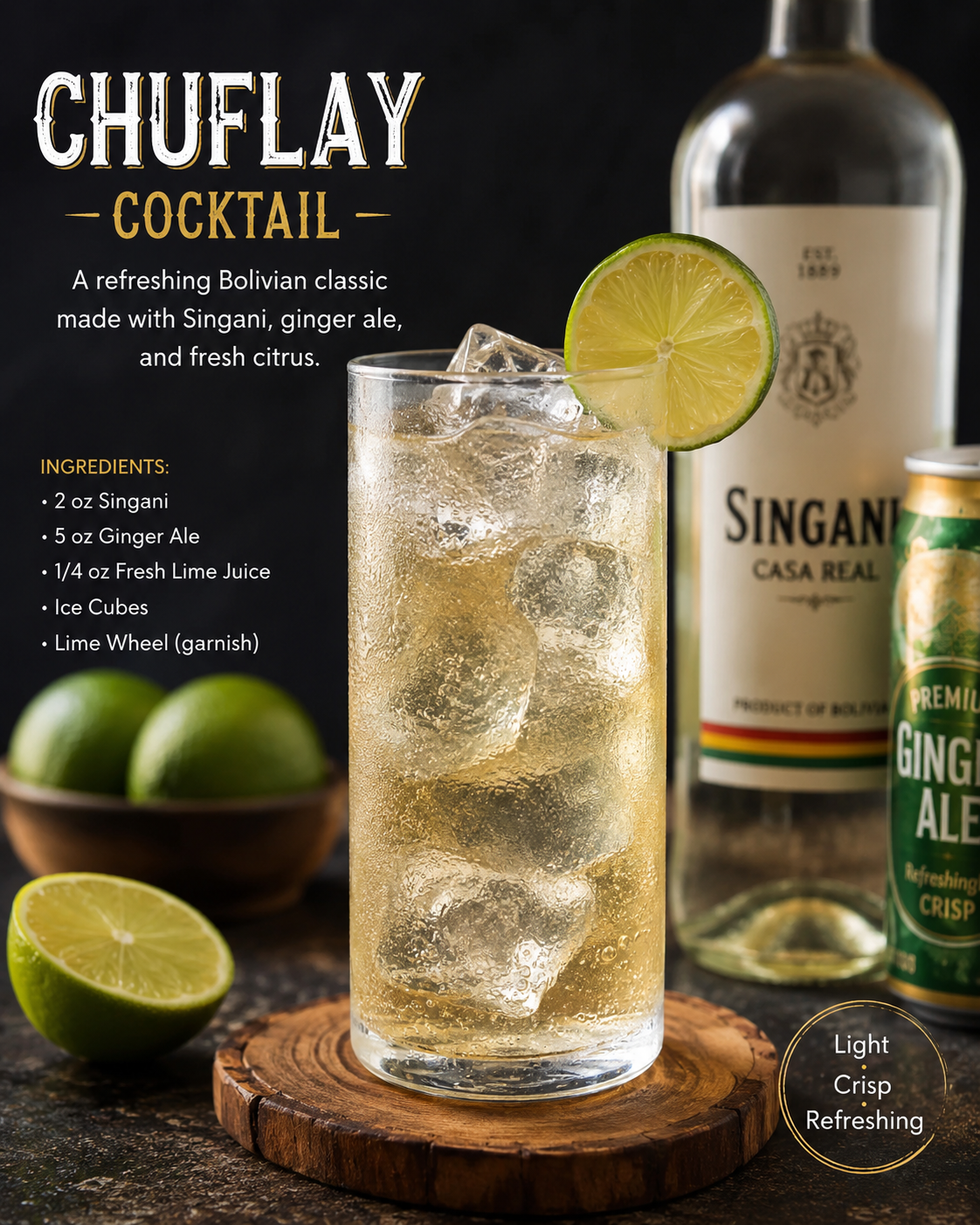
Searching for the best Chuflay cocktail near me usually means you want a refreshing drink that tastes balanced, uses genuine ingredients, and is prepared by someone who understands the original recipe. However, Chuflay is not available at every ordinary cocktail bar.
An authentic Chuflay is a traditional Bolivian highball made with singani, ginger ale, fresh citrus, ice, and a simple lime or lemon garnish. It is light, aromatic, fizzy, and easy to drink, although singani makes it an alcoholic beverage. Chuflay is widely considered one of Bolivia’s most recognizable mixed drinks.
This guide explains what a real Chuflay should contain, how it should taste, where you are most likely to find one, and how to avoid ordering a drink that only uses the name.
What Is a Chuflay Cocktail?
Chuflay is a Bolivian cocktail built around singani, an aromatic grape spirit traditionally produced from Muscat of Alexandria grapes. The singani is poured over ice and mixed with ginger ale, often with a small amount of fresh lemon or lime juice.
Most traditional recipes use:
- 1.5 to 2 ounces of singani
- About 5 ounces of ginger ale
- A small squeeze of fresh lemon or lime
- Plenty of ice
- A lime or lemon wheel for garnish
Some versions replace ginger ale with Sprite, 7UP, or another lemon-lime soda. However, ginger ale generally creates a drier, spicier drink that allows the floral character of the singani to remain noticeable. Casa Real and Singani 63 both publish recipes using singani, ginger ale, citrus, ice, and a tall glass.
Unlike a creamy fruit drink or blended mocktail, an authentic Chuflay should be clear, sparkling, citrusy, and relatively simple.
A Common Misunderstanding About Chuflay
Some online pages describe Chuflay as a colorful Pakistani mocktail made with mango, strawberry, mint, syrups, cream, or crushed ice. That description does not match the established Bolivian cocktail.
Reliable cocktail, tourism, and singani sources consistently identify Chuflay as a Bolivian drink made primarily from singani and ginger ale or lemon-lime soda.
A restaurant may create a mango Chuflay, strawberry Chuflay, or non-alcoholic Chuflay-style drink, but it should be described as a modern variation. The original drink contains singani and is therefore alcoholic.
Knowing this difference is important when searching for the best Chuflay cocktail nearby. A colorful drink carrying the name may not be the traditional cocktail you expect.
What Is Singani?
Singani is the ingredient that gives Chuflay its identity. It is a Bolivian grape spirit made from Muscat of Alexandria grapes and is known for its floral, fruity, and clean aroma.
Its flavor can include impressions of:
- White flowers
- Fresh grapes
- Citrus peel
- Light herbs
- Soft pepper
- Stone fruit
Singani should not be treated as an optional ingredient in an authentic Chuflay. Replacing it with vodka produces a fizzy vodka drink. Replacing it with gin creates something closer to a gin and ginger ale. Both may taste pleasant, but neither is a true Chuflay.
The United States Alcohol and Tobacco Tax and Trade Bureau has formally addressed singani as a distinctive product of Bolivia, which reflects the spirit’s strong connection to its country of origin.
What Does a Good Chuflay Taste Like?
A properly made Chuflay should taste refreshing rather than heavy. The first sip normally brings the bubbles and mild sweetness of ginger ale. The singani then adds floral grape aromas, while fresh citrus provides a clean and slightly sharp finish.
The best Chuflay cocktails usually have four qualities.
Balanced Sweetness
The drink should not taste like pure soda or sugar syrup. Ginger ale provides enough sweetness for most recipes, so additional simple syrup is rarely necessary.
Noticeable Singani Character
You should be able to smell and taste the grape spirit. If the glass contains too much mixer, the singani disappears and the drink becomes ordinary ginger ale with alcohol.
Fresh Citrus
Fresh lemon or lime brightens the cocktail. Bottled sour mix can make it taste artificial or excessively sweet.
Strong Carbonation
A flat Chuflay loses much of its appeal. Ginger ale should be added close to serving time, and the drink should be stirred gently so the bubbles remain.
How to Find the Best Chuflay Cocktail Near Me
Because Chuflay is less common than a Margarita, Mojito, or Martini, searching only for “cocktails near me” may not produce useful results. A more focused approach works better.
Search Several Keyword Variations
Try searches such as:
- Best Chuflay cocktail near me
- Chuflay drink near me
- Bolivian cocktail bar near me
- Singani cocktail near me
- Latin American cocktail bar near me
- Bolivian restaurant with cocktails
- Bars serving singani
- Authentic Chuflay in [city]
- Chuflay delivery near me
- South American cocktail bar in [city]
Adding your city, neighborhood, postcode, or district can produce more accurate local results.
Look for Bolivian Restaurants First
Bolivian restaurants are the most logical places to check because Chuflay is deeply connected to Bolivian food and drinking culture. It is served in bars and restaurants throughout Bolivia and may also appear at Bolivian cultural events or selected Latin American venues abroad.
Search the drinks menu rather than checking only the main food menu. Some businesses place Chuflay under headings such as:
- Traditional drinks
- Bolivian cocktails
- Highballs
- Singani cocktails
- House classics
- Latin cocktails
Check Latin American Cocktail Bars
A Latin American bar may stock singani even when Chuflay is not printed on its menu. Bartenders who already work with pisco, cachaça, mezcal, rum, and other regional spirits may be willing to prepare a Chuflay when the ingredients are available.
Search for Singani Instead of Chuflay
Some bars list their spirits but not every cocktail they can make. Searching for “singani near me” may reveal restaurants, liquor stores, menus, or social posts that do not rank for the word Chuflay.
Once you find a venue using singani, call or message it and ask whether the bartender can make a traditional Chuflay with ginger ale and fresh citrus.
Review Recent Menu Photos
Menus change frequently. A Chuflay shown in an old review may no longer be available.
Look for:
- Recently uploaded menu photographs
- Posts from the restaurant’s official account
- Customer images showing the actual drink
- Mentions of the singani brand
- Recent comments about cocktail availability
A photograph of a tall, clear, sparkling drink with ice and citrus is more consistent with a traditional Chuflay than a thick or creamy beverage.
Call Before Visiting
Calling ahead is especially useful when you would need to travel a long distance.
Ask:
Do you serve a traditional Chuflay made with singani, ginger ale, and fresh lemon or lime?
This question confirms both availability and authenticity. It also prevents confusion with fruit mocktails carrying a similar name.
How to Choose the Best Place
The closest restaurant is not automatically the best place for a Chuflay. Use the following points to compare your options.
| Quality Check | What to Look For |
|---|---|
| Base spirit | Genuine Bolivian singani |
| Mixer | Freshly opened ginger ale |
| Citrus | Fresh lemon or lime juice |
| Glass | Tall highball or Collins-style glass |
| Ice | Clean, solid ice that melts slowly |
| Balance | Floral, fizzy, lightly sweet and citrusy |
| Reviews | Recent comments about drinks and service |
| Staff knowledge | Bartender understands what Chuflay is |
| Menu accuracy | Ingredients are clearly listed |
| Customization | Sweetness and mixer can be adjusted |
A venue that identifies the singani brand and explains the recipe is generally more promising than one that lists only “house cocktail.”
Questions to Ask the Bartender
You do not need to question the bartender about every detail, but a few simple questions can help you order the drink you actually want.
“Which singani do you use?”
A knowledgeable answer indicates that the establishment understands the cocktail’s main ingredient.
“Is it made with ginger ale or lemon-lime soda?”
Ginger ale produces a more traditional spicy and aromatic profile. Lemon-lime soda creates a sweeter, softer version.
“Can you make it less sweet?”
The bartender can use a drier ginger ale, add more soda water, reduce the mixer, or increase the fresh citrus.
“Can I have fresh lime instead of bottled sour mix?”
Fresh citrus usually creates a cleaner flavor and avoids unnecessary sweetness.
“How strong is your standard serving?”
Recipes commonly use around 1.5 to 2 ounces of singani, but bar measurements can vary.
Traditional Chuflay vs Modern Variations
A good cocktail bar may offer creative versions while still respecting the original drink.
| Version | Typical Ingredients | Flavor |
| Traditional Chuflay | Singani, ginger ale, citrus, ice | Floral, fizzy and refreshing |
| Lemon-Lime Chuflay | Singani, Sprite or 7UP, lime | Sweeter and citrus-forward |
| Spicy Chuflay | Singani, ginger beer, lime | Stronger ginger heat |
| Dry Chuflay | Singani, dry ginger ale, soda, lemon | Less sweet and more spirit-led |
| Herbal Chuflay | Singani, ginger ale, citrus, herbs | Fresh and aromatic |
| Fruit Chuflay | Singani, fruit, ginger ale, citrus | Sweeter and more modern |
| Chuflay-Style Mocktail | Grape juice, ginger ale, citrus | Alcohol-free approximation |
A modern variation can still be enjoyable. The important point is that the menu should make clear whether it contains genuine singani.
Ginger Ale or Sprite: Which Is Better?
Both mixers are used, but they create different experiences.
Chuflay With Ginger Ale
Ginger ale contributes mild spice and helps balance the floral sweetness of singani. This version often feels drier and more complex.
Chuflay With Sprite or 7UP
Lemon-lime soda makes the drink sweeter and emphasizes citrus. It may appeal to people who prefer softer cocktails with less ginger flavor.
Traditional references frequently allow either option, although several dedicated Chuflay recipes prefer ginger ale.
For your first Chuflay, ginger ale is the better choice when you want to understand the original flavor profile.
How Much Should a Chuflay Cost?
The price of a Chuflay depends on the country, city, venue, alcohol taxes, and availability of imported singani.
A drink may cost more when:
- Singani must be imported
- The bar uses premium ginger ale
- The venue specializes in craft cocktails
- Fresh ingredients and large clear ice are used
- The drink is served in a hotel or fine-dining restaurant
Do not judge quality by price alone. A simple Bolivian restaurant may make a more authentic Chuflay than an expensive cocktail lounge.
Instead, compare the price with other spirit-and-mixer drinks on the same menu. A Chuflay normally should not require the labor or number of ingredients associated with a complicated shaken cocktail.
Can You Order Chuflay for Delivery?
Cocktail delivery depends on local alcohol regulations and the services available in your city. When delivery is permitted, check whether the ginger ale is packaged separately.
A premixed Chuflay can lose carbonation while traveling. The best delivery format usually includes:
- Singani and citrus in a sealed container
- A separate bottle or can of ginger ale
- Ice packed separately
- A citrus garnish
- Clear mixing instructions
If everything arrives combined, pour it over fresh ice and drink it soon after delivery.
Foods That Pair Well With Chuflay
Chuflay’s bubbles, citrus, and gentle sweetness make it suitable for salty, spicy, grilled, or fried foods.
Good pairings include:
- Empanadas
- Salteñas
- Grilled chicken
- Spiced beef
- Fried appetizers
- Fish tacos
- Ceviche-style dishes
- Roasted vegetables
- Cheese boards
- Salty nuts
The acidity refreshes the palate, while the ginger ale can soften the heat of spicy food.
How to Make an Authentic Chuflay at Home
When no bar near you serves Chuflay, the drink is simple to prepare at home.
Ingredients
- 1.5 to 2 ounces singani
- 5 ounces chilled ginger ale
- ¼ ounce fresh lemon or lime juice
- Ice cubes
- Lime or lemon wheel
Instructions
- Fill a tall glass with fresh ice.
- Pour the singani over the ice.
- Add the fresh citrus juice.
- Top with chilled ginger ale.
- Stir gently once or twice.
- Garnish with a lime or lemon wheel.
Casa Real’s classic recipe uses 2 ounces of singani, ¼ ounce of fresh lemon juice, and 5 ounces of ginger ale. Singani 63 recommends a similar build with 1.5 ounces of singani.
Taste the drink before changing it. Add more citrus when it feels too sweet or a little extra ginger ale when it feels too strong.
Alcohol-Free Chuflay-Style Mocktail
A true Chuflay contains singani, so an alcohol-free version should be called a Chuflay-style mocktail rather than an authentic Chuflay.
Try this simple alternative:
- 2 ounces white Muscat grape juice
- 4 ounces ginger ale
- 1 ounce soda water
- ¼ ounce fresh lime juice
- Ice
- Lime wheel
Pour the ingredients over ice and stir gently. It will not reproduce the complexity of singani, but the grape, ginger, citrus, and sparkling elements create a similar refreshing direction.
Mistakes That Can Ruin a Chuflay
Even a simple cocktail can be poorly prepared.
Using Too Much Soda
Excess mixer hides the aroma and flavor of the singani.
Adding Too Much Sugar
Ginger ale and lemon-lime soda are already sweet. Extra syrup can make the drink sticky and unbalanced.
Using Flat Ginger Ale
A freshly opened bottle or can creates better carbonation.
Using Old Citrus
Freshly cut lemon or lime has a brighter aroma than bottled juice or dried garnishes.
Overstirring
Aggressive stirring releases carbonation and makes the drink go flat.
Serving It Without Enough Ice
A tall glass filled with ice keeps the drink colder and slows uncontrolled dilution.
Replacing Singani Without Disclosure
Vodka, gin, pisco, and white brandy can make related drinks, but the menu should not present them as authentic Chuflay cocktails.
Why Chuflay Deserves More Attention
Chuflay shows that a memorable cocktail does not need a long ingredient list. Its character comes from the relationship between an aromatic regional spirit, spicy ginger ale, fresh citrus, and cold carbonation.
A traditional account connects the drink’s name with British railway workers in Bolivia. Gin was difficult to obtain, so local singani was used with ginger ale as a substitute. The railway expression “short-fly” is said to have gradually become “Chuflay” in local usage. The exact story has variations, but the railway explanation is repeated by established Bolivian singani sources.
Today, Chuflay remains a simple introduction to Bolivian cocktail culture and the distinctive flavor of singani.
Conclusion
Finding the best Chuflay cocktail near me starts with knowing what the drink really is. An authentic Chuflay is not a creamy fruit cocktail or a random colorful mocktail. It is a Bolivian highball made with singani, ginger ale or lemon-lime soda, fresh citrus, and ice.
Begin your search with Bolivian restaurants, Latin American bars, singani stockists, hotel lounges, and cocktail-focused venues. Check recent menus, look for genuine singani, and call ahead before making a special trip.
The best Chuflay should be cold, sparkling, aromatic, lightly sweet, and balanced by fresh citrus. When no nearby bar serves it, the original recipe is simple enough to prepare at home.
Frequently Asked Questions
What is a Chuflay cocktail?
A Chuflay is a traditional Bolivian mixed drink made with singani, ginger ale or lemon-lime soda, citrus, and ice. It is normally served in a tall glass with a lemon or lime garnish.
Is Chuflay alcoholic?
Yes. Authentic Chuflay contains singani, which is an alcoholic grape spirit. A version without singani should be identified as a Chuflay-style mocktail.
Where can I find the best Chuflay cocktail near me?
Start with Bolivian restaurants, Latin American cocktail bars, hotel lounges, and venues that stock singani. Search both “Chuflay near me” and “singani cocktails near me,” then confirm availability directly with the venue.
What does Chuflay taste like?
Chuflay tastes floral, citrusy, lightly sweet, and sparkling. Ginger ale adds gentle spice, while singani contributes aromatic grape and floral notes.
Is Chuflay a Pakistani cocktail?
No. Chuflay is an established Bolivian cocktail. Some online pages or local cafés may use the name for unrelated fruit mocktails, but those drinks do not represent the traditional recipe.
What alcohol is used in Chuflay?
The traditional base spirit is singani, a Bolivian spirit distilled from Muscat of Alexandria grapes.
Can Chuflay be made with vodka?
Vodka can be mixed with ginger ale and citrus, but the result is not an authentic Chuflay because it lacks singani’s distinctive floral grape character.
Is Chuflay made with ginger ale or Sprite?
Both versions exist. Ginger ale is commonly associated with the classic recipe, while Sprite or 7UP creates a sweeter lemon-lime variation.
What is the best singani-to-ginger-ale ratio?
A useful starting point is 1.5 to 2 ounces of singani with about 5 ounces of ginger ale. You can adjust the mixer according to your preferred strength and sweetness.
Can I make a Chuflay without alcohol?
You can make a Chuflay-style mocktail with white grape juice, ginger ale, soda water, and fresh lime. However, it should not be presented as a traditional Chuflay.
What glass is used for Chuflay?
Chuflay is generally served in a tall highball or Collins-style glass filled with ice.
What food goes well with Chuflay?
It pairs well with empanadas, grilled meats, spicy dishes, fried appetizers, seafood, cheese, and other salty foods.
Is Chuflay sweet?
It is lightly to moderately sweet, depending on the mixer. Ginger ale usually produces a more balanced drink, while Sprite or 7UP makes it noticeably sweeter.
How can I tell whether a bar serves an authentic Chuflay?
Check whether the menu lists singani, ginger ale, fresh citrus, and ice. You can also ask the bartender which singani brand is used.

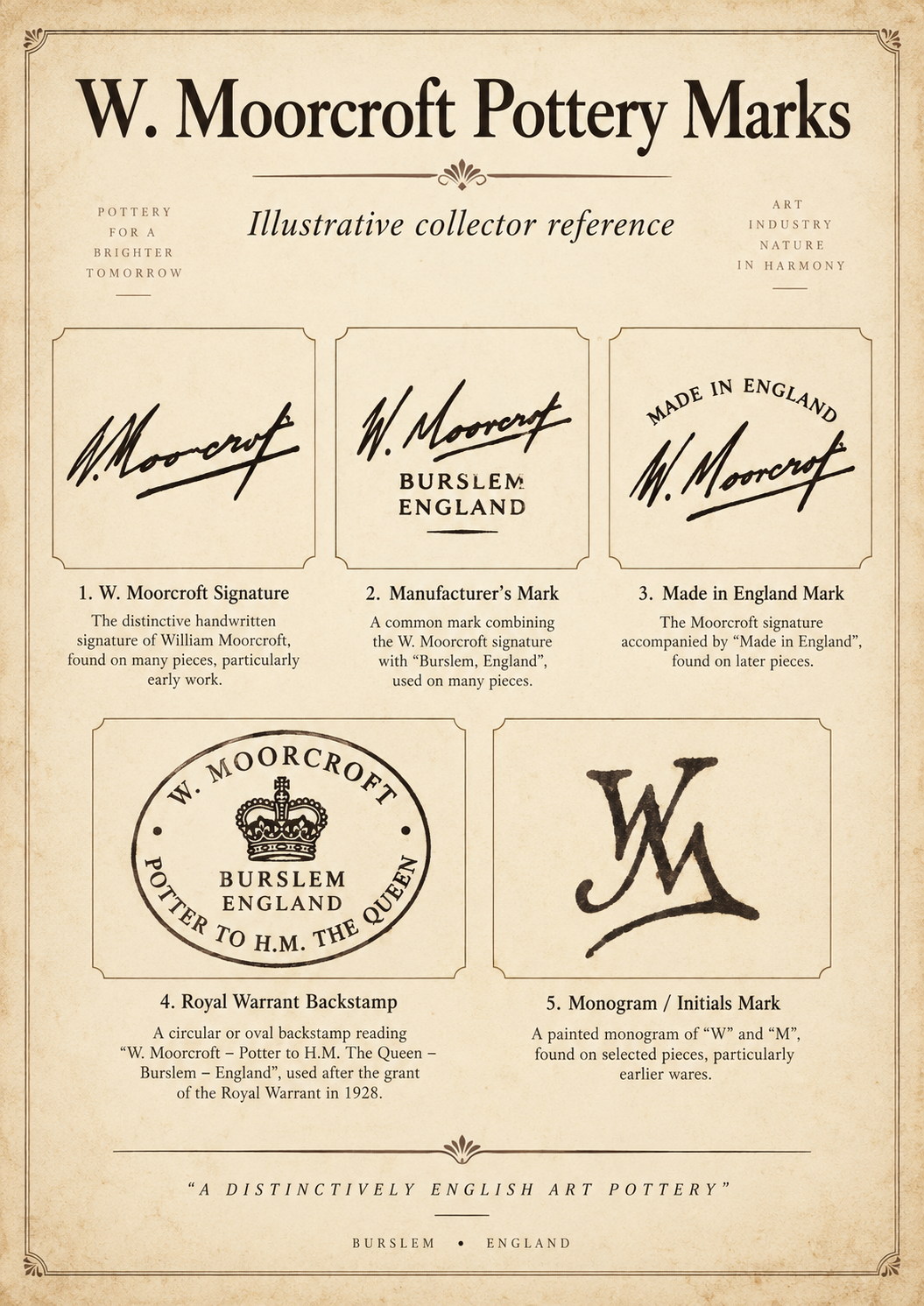
Collectors, dealers, and antique enthusiasts often search for w moorcroft pottery marks to identify the age, authenticity, and value of Moorcroft ceramics. These marks are more than simple signatures—they provide a timeline of production, reveal changes in ownership and design style, and help distinguish genuine Moorcroft pottery from reproductions.
Understanding Moorcroft marks requires looking beyond a single stamp or signature. The placement, wording, initials, paper labels, impressed marks, and overall construction of a piece all contribute to accurate identification.
This guide explains how to read Moorcroft pottery marks, what the “W” signature represents, how marks changed over time, and which details experienced collectors examine before buying or selling a piece.
Quick Facts About Moorcroft Pottery Marks
| Feature | Details |
|---|---|
| Maker | Moorcroft Pottery |
| Founder | William Moorcroft |
| Key identification clue | Factory marks, signatures, and labels |
| Common mark locations | Base, underside, or foot of the piece |
| Main purpose of marks | Authentication and dating |
| Important caution | Marks should always be judged with glaze, shape, and design together |
What Do W Moorcroft Pottery Marks Mean?
The “W” associated with Moorcroft pottery usually refers to William Moorcroft, the founder and original designer behind the pottery’s early artistic identity.
William Moorcroft developed his distinctive approach while working with James Macintyre & Co. Ltd. before establishing the independent Moorcroft name. Early pieces connected with his designs are highly sought after because of their artistic importance and rarity.
A mark containing a “W” may indicate:
- A William Moorcroft connection
- An early signature style
- A design attribution rather than a complete authentication by itself
- A historical production period requiring additional verification
A single letter or signature should never be used as the only proof of authenticity.
How to Identify Authentic Moorcroft Pottery Marks
1. Examine the Base of the Piece
The underside is usually the first place collectors inspect. Moorcroft pieces may include:
- Impressed factory marks
- Painted signatures
- Printed trademarks
- Paper labels
- Artist initials
- Retailer or exhibition labels
The type of mark often provides clues about when and where the piece was produced.
2. Compare the Mark Style With Known Periods
Moorcroft marks evolved as the company changed hands and expanded production.
Important periods include:
Early William Moorcroft Period
Early Moorcroft pieces are associated with:
- Hand-painted decoration
- Detailed tube-lined designs
- Strong artistic individuality
- Signatures connected to William Moorcroft’s work
These pieces are often among the most collectible.
Later Moorcroft Factory Production
Later marks may reflect:
- Factory branding changes
- New management periods
- Updated trademark designs
- Increased production consistency
Collectors often combine the mark with the design pattern to establish a more accurate date.
Moorcroft Marks Timeline: What Collectors Should Know
| Period | Typical Identification Features |
|---|---|
| Late 19th to early 20th century | William Moorcroft designs and early signatures |
| Early Moorcroft company years | Strong artistic marks and handcrafted characteristics |
| Mid-20th century | Factory marks and trademark variations |
| Modern production | Updated branding, labels, and artist signatures |
Dating is rarely based on a mark alone. The glaze, shape, pattern name, and decoration technique are equally important.
Common Moorcroft Pottery Mark Variations
Collectors may encounter several types of markings.
Painted Signatures
Hand-painted signatures can provide valuable information, especially on earlier pieces. However, handwriting styles may vary, making comparisons important.
Impressed Marks
Marks pressed directly into the clay are often found on the underside of pottery. These can survive wear better than painted details.
Paper Labels
Original labels can be useful dating clues, but collectors should be cautious because labels can become detached, replaced, or damaged.
Artist Signatures
Modern Moorcroft pieces frequently include the signature of the decorator or artist. These marks can help confirm authenticity and production details.
How Experts Authenticate Moorcroft Pottery
Experienced collectors rarely rely on one feature. They assess the complete object.
A professional evaluation usually considers:
- Mark accuracy
Does the mark match documented Moorcroft examples? - Design history
Is the pattern consistent with known Moorcroft collections? - Craftsmanship
Does the tube lining, glazing, and painting quality match authentic production? - Condition
Chips, cracks, restoration, and glaze damage can significantly affect value. - Provenance
Original purchase records, family history, or auction documentation can strengthen authenticity.
Mistakes to Avoid When Reading Moorcroft Marks
Assuming Every W Mark Is Rare
A “W” connection can be historically interesting, but rarity depends on the entire piece, not one letter.
Ignoring the Design Pattern
Moorcroft is known for recognizable artistic themes. A mark without matching design characteristics may require further investigation.
Trusting Online Photos Alone
Small details such as impressed marks, glaze texture, and brushwork are difficult to judge from poor-quality images.
Cleaning the Base Too Aggressively
Collectors should avoid harsh cleaning methods that may remove original labels or damage important markings.
How Moorcroft Marks Affect Value
Marks influence value because they help establish:
- Authenticity
- Production era
- Artist involvement
- Historical importance
- Collector demand
However, the most valuable Moorcroft pieces usually combine a desirable design, excellent condition, strong provenance, and a significant historical connection.
Factors that can increase value include:
- Early William Moorcroft association
- Rare patterns
- Limited editions
- Exceptional craftsmanship
- Original condition
Where to Find Reliable Moorcroft Mark Information
For serious identification work, collectors often compare pieces against:
- Specialist Moorcroft reference books
- Museum collections
- Established auction records
- Experienced antique dealers
- Collector communities
Reference material is especially useful because marks changed gradually, and many variations overlap between periods.
Frequently Asked Questions About W Moorcroft Pottery Marks
Does a W mark prove my Moorcroft piece is authentic?
No. A W mark may provide an important clue, but authenticity requires examining the mark alongside the design, glaze, workmanship, and history of the item.
Where are Moorcroft pottery marks usually located?
Most marks appear on the underside or base of the pottery, although labels and signatures may appear elsewhere.
Are older Moorcroft pieces more valuable?
Not always. Age can increase interest, but rarity, design popularity, condition, and provenance often have a greater impact on market value.
Can Moorcroft marks help date a vase or bowl?
Yes. Mark styles can narrow down production periods, but experts usually combine marks with other identifying features for accurate dating.
Final Thoughts on W Moorcroft Pottery Marks
Learning to interpret w moorcroft pottery marks is one of the most useful skills for anyone collecting or researching Moorcroft ceramics. The mark provides a historical trail, but the strongest identifications come from studying the entire piece.
Whether you own a family heirloom, are building a collection, or are considering a purchase, examining Moorcroft signatures, labels, designs, and craftsmanship together will give you the clearest picture of authenticity and value.
If you searched for adsy pw hb5, you are probably trying to understand an unusual web address, determine where it leads, or decide whether it is safe to interact with. The phrase is commonly written online as adsy.pw/hb5, which has been discussed as a shortened or redirect-style URL connected with online marketing and traffic routing.
The important point is that a shortened URL does not automatically reveal its final destination. Public references discussing adsy.pw/hb5 describe it as a redirect or campaign-style link, but there is limited authoritative documentation confirming the precise purpose of the /hb5 path.
That distinction matters. Instead of assuming the link is safe, malicious, or officially connected to a particular company, users should understand how redirects work and verify the destination before trusting it.
Quick Facts About adsy pw hb5
| Question | Practical Answer |
|---|---|
| What is adsy pw hb5? | A search phrase generally referring to adsy.pw/hb5 |
| What type of URL is it? | It appears to function or be discussed as a redirect/shortened URL |
What does /hb5 mean? |
Most likely a path or campaign identifier; its exact purpose is not officially documented |
| Is it the same as Adsy.com? | That connection should not be assumed without direct verification |
| Is it automatically unsafe? | No, but hidden destinations deserve additional caution |
| Why use short links? | Tracking, campaign attribution, easier sharing, and redirect management |
| Should you click it blindly? | No; verify the destination and source first |
What Is adsy pw hb5?
The keyword adsy pw hb5 appears to be a spaced version of the URL adsy.pw/hb5. Structurally, adsy.pw is the domain while /hb5 is a path that can identify a particular resource, redirect rule, campaign, or destination.
Several pages indexed for the term describe it as a URL-shortening or redirect mechanism used in digital marketing. These sources broadly agree on the redirect interpretation, although their claims about what specifically happens after the redirect are not always consistent.
That inconsistency is itself useful information. When the final destination of a short URL cannot be independently confirmed, the safest description is that it appears to be a redirect-style URL rather than a standalone service or product.
How adsy.pw/hb5 May Work
A redirect URL acts as an intermediary between the link someone clicks and the page eventually displayed in their browser.
Instead of sharing a long destination such as:
example.com/product?campaign=summer&utm_source=email&utm_medium=affiliate
a campaign owner might use a compact redirect address.
When someone opens that shortened URL, the server can process the request and then send the browser to another page. This general mechanism is used across advertising, analytics, social media, affiliate marketing, email campaigns, and QR-code tracking.
Public articles about adsy.pw/hb5 commonly describe this same basic process.
Why the Final Destination Can Be Hidden
A direct link tells you the website you are about to visit. A redirect URL adds another layer between you and that destination.
That can be useful for legitimate campaign management, but it also reduces transparency because the user cannot immediately see where the link eventually goes.
For this reason, the destination matters more than the short URL itself.
Why Marketers Use Redirect and Shortened Links
Redirect links solve several practical marketing problems.
They can turn complicated tracking URLs into compact links, make campaign links easier to distribute, and allow marketers to measure engagement without changing every promotional placement.
A campaign system may also distinguish traffic coming from email, social media, advertisements, influencers, publishers, or individual promotions by assigning each campaign a different path.
For example, a suffix such as /hb5 could theoretically function as a campaign identifier. However, there is no reliable public documentation establishing exactly what “hb5” represents in this particular URL, so treating speculative interpretations as confirmed facts would be misleading.
adsy pw hb5 and Affiliate Marketing
Affiliate marketing frequently relies on tracked links.
When a visitor follows an affiliate link, attribution technology can help determine which publisher or campaign generated the visit or conversion. Redirect services can simplify those URLs while preserving campaign parameters.
That explains why searches for adsy pw hb5 are frequently associated with phrases such as affiliate tracking, promotional links, digital campaigns, URL shortening, and marketing analytics.
It does not, however, prove that every instance of adsy.pw/hb5 represents an affiliate offer.
Is adsy pw hb5 Connected to Adsy.com?
This is one of the most important distinctions to make.
Adsy.com is an established digital PR and guest-posting platform that allows advertisers to purchase content placements and publishers to monetize websites. Its official website currently describes an inventory of more than 150,000 websites and provides services involving guest posting, link building, digital PR, and publisher monetization.
The fact that adsy.pw contains the word “adsy” does not by itself establish ownership or an official relationship with Adsy.com.
Unless a domain, company statement, technical record, or official Adsy page confirms the connection, users should treat Adsy.com and adsy.pw/hb5 as separate entities for verification purposes.
This is an important EEAT consideration because many articles discussing the keyword blur the distinction between the recognizable Adsy brand and the separate .pw URL without presenting primary evidence.
What Does Adsy.com Actually Do?
Understanding the legitimate Adsy platform helps prevent confusion.
According to its official website, Adsy provides a marketplace where advertisers can select websites using SEO metrics and purchase guest-post placements. The platform advertises filters involving metrics such as Ahrefs organic traffic, Moz Domain Authority, Semrush metrics, country, language, and website category.
Publishers can also join the platform, add websites, receive content-placement orders, and earn money for completed placements.
Those services are substantially different from simply operating a shortened URL.
Is adsy pw hb5 Safe?
There is not enough authoritative evidence to responsibly label every interaction with adsy.pw/hb5 as either completely safe or definitely dangerous.
The more accurate answer is that any shortened or redirecting URL requires evaluation based on its source and final destination.
Short links are widely used by legitimate companies. They are also attractive to scammers because they can conceal a suspicious destination until after someone clicks.
Some independent articles make strong claims about the safety or destination of adsy.pw/hb5, but those claims are inconsistent across sources and should not be treated as definitive without primary evidence.
How to Check adsy.pw/hb5 Before Clicking
A sensible verification process is more reliable than trusting a link because it looks professional—or rejecting it simply because it is unfamiliar.
- Check who sent the link. A URL received unexpectedly through an unknown email, message, comment, or pop-up deserves more caution than one provided through a verified source.
- Inspect the domain carefully. Look for misspellings, unusual extensions, misleading brand names, or domains pretending to resemble established companies.
- Preview the destination where possible. Security scanners and URL-analysis services can sometimes examine redirect chains without requiring normal interaction with the destination.
- Check the final website separately. Search for the organization or product independently instead of relying exclusively on the shortened URL.
- Avoid entering sensitive information after an unexpected redirect. Login credentials, payment information, personal details, or verification codes should only be entered when you have independently confirmed the website.
- Pay attention to browser warnings. Certificate errors, deceptive-site warnings, forced downloads, unexpected permission requests, and aggressive redirects are strong reasons to leave the page.
- Use the official website when available. If the link claims to represent a recognized company, navigate to that company’s verified domain independently.
Red Flags Worth Taking Seriously
The URL format alone cannot determine trustworthiness. Context usually provides stronger evidence.
A redirect deserves additional scrutiny when it arrives through an unsolicited message, creates artificial urgency, promises unrealistic rewards, redirects repeatedly, requests unexpected account credentials, triggers downloads, or leads to a website whose domain does not match the organization being promoted.
A professional-looking landing page is also not proof of legitimacy. Modern templates make it relatively easy to build convincing pages quickly.
Redirect URLs vs Direct URLs
| Feature | Redirect/Short URL | Direct URL |
| Destination visible immediately | Usually no | Usually yes |
| Easy to share | Excellent | Depends on URL length |
| Campaign tracking | Strong | Possible with parameters |
| Branding transparency | Lower unless branded | Higher |
| Ability to change destination | Often possible | Usually requires changing the published URL |
| User trust | Depends heavily on domain reputation | Generally easier to assess |
| Security evaluation | Requires extra verification | Destination can be inspected directly |
Neither format is inherently good or bad.
The difference is primarily visibility and control. Redirect links provide marketers with flexibility, while direct URLs provide users with greater transparency.
adsy pw hb5 From an SEO Perspective
The keyword presents an interesting search-intent pattern.
Someone searching adsy pw hb5 is unlikely to be looking for a broad explanation of SEO. The searcher probably encountered the term somewhere and wants one of three answers: what it is, where it leads, or whether it can be trusted.
That makes the dominant intent informational with a strong safety and navigational component.
A useful page targeting this query therefore needs to answer those questions immediately rather than padding the article with unrelated digital-marketing theory.
Can Redirect Links Help SEO?
Redirects themselves are legitimate parts of website architecture.
SEO professionals routinely use redirects during migrations, URL changes, deleted-page consolidation, HTTPS migrations, and canonicalization workflows. Campaign redirects also serve analytics and attribution purposes.
However, a promotional redirect should not be confused with a backlink strategy.
Google evaluates links and pages within a much broader context that includes relevance, quality, intent, crawlability, site reputation, and whether practices are designed primarily to manipulate search rankings.
adsy pw hb5 and Guest Posting
Because the name resembles Adsy, some search results combine discussion of adsy.pw/hb5 with guest posting and backlink acquisition.
The verified Adsy.com platform does indeed offer guest-posting and link-building services. Its official pages describe advertiser workflows involving site selection, content placement, SEO metrics, campaign management, and backlink opportunities.
What should not be assumed is that the /hb5 URL itself represents those services.
A strong research process separates what is verified about Adsy.com from what is merely speculated about adsy.pw/hb5.
Common Misconceptions About adsy pw hb5
One common mistake is treating every article ranking for the keyword as independent confirmation.
Search engines can surface dozens of pages repeating essentially the same unverified statement. Repetition does not transform a claim into primary evidence.
Another mistake is assuming that a .pw domain is suspicious simply because the extension is unfamiliar. A top-level domain alone cannot establish whether a website is legitimate.
The opposite mistake is equally risky: assuming the link is trustworthy because several marketing blogs describe it as a normal shortener.
The strongest conclusion comes from verified ownership, documented redirect behavior, reputable security analysis, and confirmation of the final destination.
What Website Owners Can Learn From the Keyword
There is a broader marketing lesson behind adsy pw hb5.
Users increasingly investigate unfamiliar URLs before trusting them. That means transparency is becoming a conversion factor as well as a security consideration.
Businesses using shortened URLs should therefore favor recognizable branded domains, clearly disclose affiliate relationships where appropriate, maintain consistent landing-page branding, use HTTPS, avoid unnecessary redirect chains, and give visitors enough information to understand where they are going.
Trust reduces friction.
Mystery increases it.
Better Practices for Marketing Links
For marketers, a shortened URL should improve campaign management without sacrificing credibility.
A strong implementation uses a recognizable domain, consistent campaign naming, accurate analytics, a minimal number of redirects, secure HTTPS connections, and a destination that clearly matches the promise made before the click.
Publishers should also avoid disguising a destination simply to increase click-through rates.
A click generated through confusion is far less valuable than one generated through genuine intent.
Frequently Asked Questions About adsy pw hb5
What does adsy pw hb5 mean?
The phrase generally refers to the URL adsy.pw/hb5. Publicly indexed pages commonly describe it as a short or redirect-style marketing URL, although authoritative documentation explaining the exact /hb5 destination is limited.
Is adsy pw hb5 a website?
adsy.pw is the domain portion, while /hb5 is a path located beneath that domain. The complete address can therefore act as a webpage, redirect, campaign endpoint, or tracking URL depending on how the server is configured.
What does HB5 stand for?
There is no sufficiently authoritative public source proving exactly what “hb5” represents within this URL. Claims that connect it to a particular campaign or product should therefore be treated as unverified unless supported by primary evidence.
Is adsy.pw/hb5 the official Adsy website?
The verified Adsy guest-posting platform operates at Adsy.com. Its official website describes digital PR, guest posting, backlink placement, and publisher services.
A direct relationship between that platform and adsy.pw/hb5 should not be assumed solely from the similar name.
Why would someone use a link like adsy.pw/hb5?
Possible reasons include shortening a longer address, measuring clicks, managing campaigns, routing users to different destinations, or preserving tracking information.
Those are common uses of redirect links generally, not confirmation of the specific purpose of this particular URL.
Can clicking a shortened link expose information?
Like ordinary website requests, redirects may enable servers and analytics platforms to observe technical information associated with a visit. Exactly what information is processed depends on the services and destination involved.
Users concerned about privacy should review the destination site’s privacy policy rather than assuming all short-link services collect the same data.
Should marketers use links like this?
Redirect links can be useful, but recognizable branded URLs usually provide greater transparency and user confidence.
For important campaigns, the best link is one that balances measurable analytics with a destination users can trust.
Final Verdict on adsy pw hb5
adsy pw hb5 is best understood as a search term referring to the URL adsy.pw/hb5, which public sources commonly characterize as a shortened or redirect-style link. What cannot be established confidently from reliable primary documentation is the exact purpose of the /hb5 path, its permanent destination, or an official relationship with the separate Adsy.com guest-posting platform.
That uncertainty is more important than speculation.
If you encounter adsy pw hb5, evaluate the sender, inspect the destination, verify any claimed brand independently, and avoid submitting sensitive information until you know exactly which website you are dealing with.
For marketers, the lesson is equally clear: redirects can make tracking easier, but clarity, relevance, security, and transparency are what turn a click into trust.

Bumfuzzledjane com is a content-based website that has attracted searches from people trying to understand what it publishes, whether it is connected to the original “Bumfuzzled Jane” blog, and whether the domain is safe to visit.
The available evidence suggests that the name has been used in two different contexts. An earlier Bumfuzzled Jane project focused largely on personal health and lifestyle writing, while the current domain appears to operate as a broader multi-topic publishing website.
This guide examines the site’s history, present content model, credibility signals, potential risks and the checks readers should complete before relying on its information.
Bumfuzzledjane com Quick Facts
| Detail | Current Findings |
|---|---|
| Website type | General informational and guest-content website |
| Main subjects | Business, finance, health and technology |
| Original brand focus | Personal lifestyle, fitness and healthy living |
| Current indexed content | A limited number of publicly visible pages |
| Secure connection | HTTPS appears to be enabled |
| Shopping features | No clearly established online store |
| Account requirement | No confirmed requirement to create an account |
| Best use | General reading and topic discovery |
| Main concern | Limited transparency about current ownership and editorial oversight |
| Overall assessment | Browse cautiously and verify important claims independently |
What Is Bumfuzzledjane com?
Bumfuzzledjane com currently appears to be a general-interest publishing website rather than a specialised service, software platform or online store. Its homepage has recently been indexed with business-focused content, including an article about management practices for architecture, engineering and construction firms.
A third-party guest-post marketplace categorises the domain under finance, health and technology. The same listing promotes paid advertorial publication and permanent dofollow links, indicating that at least some content may be submitted for marketing or link-building purposes.
This does not automatically mean every article is unreliable. However, readers should distinguish independently researched editorial content from sponsored, contributed or SEO-driven material.
Understanding the Original Bumfuzzled Jane Blog
The name “Bumfuzzled Jane” existed online before the current version of the website. Older references associate it with Sarah Bolandi, a writer with a communications background who created a blog to share personal observations, especially about healthy living.
Her published work included first-person discussions of exercise, nutrition, fitness classes and lifestyle changes. An archived contributor biography describes her as an everyday health enthusiast who experimented with different foods and workouts rather than presenting herself as a certified medical or fitness professional.
A separate guest article about artificial sweeteners was also credited to Sarah Bolandi of Bumfuzzled Jane. That article discussed saccharin, aspartame, sucralose and stevia while referring readers to external research and health sources.
Is the Current Domain the Same Website?
A direct connection between the original lifestyle blog and the current multi-topic domain is not clearly documented.
Older references point to a Blogspot address and a Facebook presence, while the active .com domain now displays broader business-oriented material. A current domain-safety directory also describes the registered domain as relatively recent, which further suggests that the present website may not be identical to the original blog.
The safest conclusion is that the name has historical associations with Sarah Bolandi’s lifestyle content, but visitors should not assume that she owns, edits or endorses the current website without an explicit statement on the domain.
What Type of Content Does the Site Publish?
The current content model appears broader than the original health-focused blog. Public listings associate the domain with several subjects.
Business and Professional Management
The homepage currently highlights an article about management within architecture, engineering and construction firms. This suggests that the website accepts or publishes professional business commentary.
Possible topics may include:
- Business operations
- Workplace productivity
- Industry management
- Professional services
- Marketing and organisational strategy
Health and Lifestyle
Health remains associated with the Bumfuzzled Jane name because of its earlier content history. Previous articles covered artificial sweeteners, exercise methods, weight management and personal wellness experiences.
Current health articles should still be evaluated carefully. Personal experience can make a piece relatable, but it cannot replace evidence from qualified medical professionals or recognised health organisations.
Finance and Technology
The domain is also listed in finance and technology categories by a third-party publishing marketplace. That classification may reflect the subjects the website accepts from contributors rather than a narrow editorial speciality.
Readers should be especially cautious with financial recommendations, investment claims, cybersecurity advice or technical instructions that could affect money, privacy or device security.
Is Bumfuzzledjane com Legit?
There is not enough transparent information to deliver an absolute “legit” or “scam” verdict. The domain resolves over HTTPS and has been described as safe by one automated website-checking service, but those signals provide only a limited technical assessment.
A secure connection protects information travelling between a browser and the website. It does not prove that every article is accurate, that every author is qualified or that every external link is trustworthy.
Positive Trust Signals
Several details reduce immediate concern:
- The domain is accessible through an encrypted HTTPS connection.
- Search engines have indexed content from the website.
- No confirmed online shopping or payment system is prominently associated with the domain.
- One third-party checker reported no obvious malicious-content warning during its assessment.
- The Bumfuzzled Jane name has a traceable history connected to previously published lifestyle writing.
Areas That Require Caution
The site also presents several uncertainties:
- Current ownership is not clearly established through the available public pages.
- The relationship between the original blog and the present domain is unclear.
- The publicly indexed content footprint appears limited.
- A marketplace advertises paid articles and dofollow links on the domain.
- Author biographies, editorial review procedures and correction policies may not be consistently visible.
- Third-party safety scores have limited confidence and should not be treated as guarantees.
These issues do not prove harmful intent. They simply mean readers should verify information before treating the website as an authoritative source.
How to Evaluate an Article on Bumfuzzledjane com
The quality of a publishing website should be assessed article by article. A domain can contain both useful contributions and weak promotional pieces.
1. Check the Author
Look for the writer’s full name, professional background and relevant experience. An article about business management should ideally come from someone with demonstrated business or industry knowledge.
For medical, legal or financial subjects, qualifications matter even more. Anonymous articles or generic author accounts deserve additional scrutiny.
2. Inspect the Sources
Strong content normally links to original research, government agencies, recognised professional organisations or direct company documentation.
Be cautious when an article:
- Makes numerical claims without a source
- Refers vaguely to “studies” without identifying them
- Links mainly to commercial pages
- Uses outdated statistics
- Repeats claims found across low-quality blogs
- Presents opinions as established facts
3. Identify Commercial Intent
Some articles are written primarily to educate, while others are designed to place a backlink, promote a company or influence a purchase.
Check whether the article includes:
- A sponsorship disclosure
- Affiliate links
- Repeated brand mentions
- Keyword-heavy anchor text
- An unusually promotional conclusion
- Links unrelated to the main subject
A commercial purpose does not automatically make an article inaccurate. It should, however, be clearly disclosed.
4. Confirm the Publication Date
Business, health, finance and technology information can become outdated quickly. An article may remain indexed long after its advice is no longer accurate.
Check both the publication date and the date of the cited evidence. A recently updated page can still rely on research that is many years old.
5. Compare the Information Elsewhere
Important claims should be confirmed through at least one independent and authoritative source.
Useful verification sources include:
- Government departments
- Universities and academic journals
- Recognised medical institutions
- Professional associations
- Official product documentation
- Reputable news organisations
- Regulatory agencies
Is It Safe to Click Links on the Website?
Visitors should apply the same precautions they would use on any unfamiliar multi-author website. The domain itself may load securely, but an article can still link to external pages with different security standards.
Before following a link:
- Hover over it to preview the destination.
- Check that the domain name is spelled correctly.
- Avoid shortened links with hidden destinations.
- Do not download unexpected files.
- Be cautious with browser notification requests.
- Never enter banking credentials after following an unverified link.
- Scan suspicious URLs with a reputable security service.
External links deserve particular attention when they lead to downloads, investment platforms, health-product stores, unfamiliar subscription pages or login screens.
Should You Download Files From Bumfuzzledjane com?
Avoid downloading files unless the article clearly explains what the file contains, who created it and why it is needed.
Documents such as PDFs may be harmless, but executable files, browser extensions, mobile applications and compressed archives carry greater risk. Scan every unfamiliar download before opening it and keep your operating system and antivirus protection updated.
A normal informational article should rarely require software installation. Treat instructions to disable security tools or bypass browser warnings as serious red flags.
Should Businesses Buy a Guest Post on the Domain?
A third-party marketplace currently promotes paid advertorials on the website, including dofollow links and fast publication. It also displays third-party authority metrics while reporting no estimated traffic from two SEO platforms at the time of its listing.
Businesses considering a placement should evaluate more than domain authority or domain rating.
Metrics to Review Before Purchasing
- Estimated organic traffic
- Ranking keyword relevance
- Recent publishing frequency
- Indexation of existing posts
- Topical consistency
- Audience location
- Engagement quality
- Outbound-link patterns
- Previous ownership or domain repurposing
- Visibility of sponsored-content disclosures
A backlink from a high-metric domain may provide little value if the site has no relevant readership, weak organic visibility or a large number of unrelated paid articles.
Common Guest-Post Mistakes
Avoid choosing a placement solely because it offers:
- A dofollow link
- Permanent publication
- A high authority score
- A low price
- Fast turnaround
- Broad acceptance of unrelated topics
Topical relevance, editorial standards and genuine audience value are more meaningful than a single third-party SEO score.
Pros and Cons of Bumfuzzledjane com
Potential Advantages
- The name has a traceable history in lifestyle publishing.
- The current domain covers multiple informational subjects.
- HTTPS provides encrypted browsing.
- Articles may help readers discover unfamiliar business or lifestyle topics.
- Businesses may be able to contribute relevant content.
Potential Disadvantages
- The current ownership and editorial structure are unclear.
- The relationship with the original blog is not confirmed.
- The website’s indexed footprint appears relatively small.
- Paid guest content may affect topical consistency.
- Third-party traffic estimates shown by one marketplace were zero.
- Specialist claims may not always be written or reviewed by qualified experts.
Red Flags to Watch For
Leave the website or close a page if it suddenly:
- Redirects you to an unrelated domain
- Requests credit-card details without a clear purchase
- Claims your device is infected
- Pressures you to act immediately
- Opens repeated pop-ups
- Downloads a file automatically
- Requests cryptocurrency payments
- Asks for passwords or identity documents
- Promises guaranteed investment returns
- Recommends stopping prescribed medical treatment
These behaviours are not confirmed features of the domain. They are general warning signs that apply to any unfamiliar website.
Frequently Asked Questions
What is bumfuzzledjane com used for?
It currently appears to be a general content-publishing website covering subjects such as business, health, finance and technology. Historically, the Bumfuzzled Jane name was associated with personal lifestyle and wellness writing.
Who created Bumfuzzled Jane?
Older contributor profiles credit Sarah Bolandi with starting the original Bumfuzzled Jane blog. She reportedly used it to discuss various interests, with a particular emphasis on healthy living.
Does Sarah Bolandi own the current website?
No reliable public evidence reviewed for this article confirms that she owns or manages the current .com domain. The original brand and the present website should therefore be treated as potentially separate projects.
Is bumfuzzledjane com a shopping website?
The publicly indexed version appears to focus on articles rather than direct online retail. Visitors should nevertheless examine any individual page carefully before entering payment information.
Does the website publish sponsored articles?
A third-party guest-post marketplace advertises paid advertorial publication on the domain. Readers should check individual articles for sponsorship, author and affiliate disclosures.
Is the website safe to visit?
One automated checker reported HTTPS support and no obvious malicious-content warning, but it also showed limited confidence data. This is a useful preliminary signal, not a complete security guarantee.
Can its health information be trusted?
Health articles may provide general background or personal experience, but medical decisions should be based on current guidance from qualified professionals and authoritative health organisations.
Why are people searching for this domain?
Users may encounter the name in search results, backlinks, guest posts, older lifestyle references or analytics data. The unusual domain name also encourages people to investigate what the site is and whether it is trustworthy.
Final Verdict
Bumfuzzledjane com appears to be an active informational domain with a name connected historically to an earlier healthy-lifestyle blog. The current website, however, seems to have expanded or shifted into broader business, finance, health and technology publishing.
There is no conclusive evidence that the domain is inherently malicious, but its limited editorial transparency, sparse indexed footprint and availability for paid guest content mean it should not be trusted automatically. Read individual articles critically, verify significant claims and exercise extra caution around downloads, financial advice, medical information and external links.
Overall, bumfuzzledjane com may be suitable for casual topic discovery, but readers should rely on more authoritative sources whenever accuracy, money, health, privacy or security is at stake.


MyGreenBucks Net Jones: What’s Verified, What Isn’t

andy ham radio linux: Complete Setup Guide (2026)

aiostream apk: Android Setup, Safety & Best Options
-

 Fashion9 years ago
These ’90s fashion trends are making a comeback in 2017
-
Entertainment9 years ago
The final 6 ‘Game of Thrones’ episodes might feel like a full season
-
Fashion9 years ago
According to Dior Couture, this taboo fashion accessory is back
-
Entertainment9 years ago
The old and New Edition cast comes together to perform
-
Sports9 years ago
Phillies’ Aaron Altherr makes mind-boggling barehanded play
-
Business9 years ago
The 9 worst mistakes you can ever make at work
-
Entertainment9 years ago
Disney’s live-action Aladdin finally finds its stars
-
Business9 years ago
Uber and Lyft are finally available in all of New York State