
Tech
camehoresbay: Meaning, Uses, Risks & Future


Introduction & Hook:camehoresbay is one of those unusual search terms that creates instant curiosity because it does not point to one clear meaning at first glance. Some search results frame it as a digital ecosystem, others describe it like a coastal destination, and a few surrounding results create confusion with similarly spelled adult-domain terms. This guide gives readers a cleaner, safer, and more useful explanation of the keyword so they can understand the idea, evaluate the context, and avoid misleading assumptions.
Quick Bio
| Feature | Details |
|---|---|
| Core Definition | camehoresbay is an emerging online keyword used in articles to describe either a flexible digital concept, a creative business ecosystem, or a fictional coastal-style identity. |
| Origin Pattern | The term appears to have grown through search-driven content, brand-style explainers, and curiosity-based articles rather than through one widely verified official source. |
| Primary Use | It is mostly used for informational content, digital platform explanations, business creativity topics, lifestyle storytelling, and keyword research experiments. |
| Main Industry Links | Digital business, creator economy, online communities, content marketing, platform branding, travel-style writing, and web safety awareness. |
| Common Materials | Articles, brand descriptions, platform-style guides, trust checks, online search reports, and glossary-style explainers. |
| Popular Applications | SEO content, niche website topics, digital product positioning, community-building language, safety education, and fictional destination branding. |
What Is camehoresbay?
camehoresbay can be understood as a flexible keyword with more than one public-facing interpretation. In the safest and most useful sense, it works as a digital concept used to describe connection, creativity, online growth, and adaptable business systems. It is not yet supported by one universally accepted definition, which is why readers often find different explanations across different websites.
The best way to explain camehoresbay is to treat it as a developing term rather than a fixed institution. It may be used by writers to describe a platform-like environment where creators, entrepreneurs, and small brands connect around tools, content, and commerce. It may also appear in lifestyle-style articles as a symbolic bay or destination, giving the word a softer and more visual identity.
Why People Search for camehoresbay
People search for camehoresbay because the keyword feels unfamiliar, branded, and slightly mysterious. When a term does not have a clear dictionary meaning, searchers usually want a plain answer: what it means, whether it is real, how it is used, and whether they should trust the websites connected with it. That curiosity creates a strong informational search intent, which is why a complete guide should explain meaning, context, use cases, and safety instead of repeating vague claims.
Another reason the keyword attracts searches is the way modern keyword trends spread across blogs. A strange term can appear on several websites, each giving it a slightly different angle. Readers then compare those meanings and look for a page that separates useful interpretation from speculation.
Origin and Search Confusion Behind the Term
Its origin is not clearly documented by a single official brand, place authority, or public company profile. That matters because many competing pages describe the term confidently without proving where it came from. A responsible explanation should admit this uncertainty and avoid presenting invented details as confirmed facts.
There is also a spelling issue that deserves careful attention. Search engines may surface nearby terms that look similar but point toward very different kinds of sites, including adult-oriented or safety-check pages. For this reason, users should check the exact spelling, scan the domain carefully, and avoid clicking results simply because the name looks familiar.
How camehoresbay Works Digitally
As a digital concept, camehoresbay is best described as a connection-based ecosystem. It combines the language of community, online selling, content creation, and flexible digital tools into one broad idea. Instead of being limited to one product or service, it can represent the kind of online space where people share knowledge, build audiences, and test business ideas.
This interpretation is useful because many online businesses now need more than a simple website. They need trust signals, content, payment options, audience communication, analytics, and a reason for users to return. The term can be framed as a shorthand for that wider system when writing about modern digital growth.
Community Layer
The community layer is one of the most important parts of the concept. A digital ecosystem becomes more valuable when users can ask questions, share progress, learn from each other, and feel part of something bigger than a transaction. This is why community language often appears in articles about creator platforms and online business hubs.
A strong community layer also builds trust over time. When people see active discussions, helpful guidance, and transparent feedback, they are more likely to stay engaged. For this topic, that means the idea works best when it is connected to participation rather than passive browsing.
Marketplace and Content Layer
The marketplace layer is about turning attention into useful exchange. In a business interpretation, that exchange could include digital downloads, freelance services, courses, templates, subscriptions, consulting, or niche resources. The content layer supports that marketplace by educating users before they make a decision.
This combination matters because modern users rarely buy from a blank page. They want explanations, comparisons, examples, and proof that a product or service solves a real problem. This type of model becomes stronger when content and commerce support each other instead of standing apart.
The camehoresbay Coastal or Place-Like Identity
Some articles present the term like a peaceful coastal place, using language around beaches, calm water, local culture, seafood, markets, and scenic views. This should be read carefully because there is limited public evidence that it is a widely recognized real-world destination. Still, the place-like identity can work as a brand metaphor because a bay suggests safety, arrival, community, and calm discovery.
This travel-style meaning can be useful for storytelling. A writer might use it as an imagined destination to discuss slow living, nature, relaxation, or lifestyle branding. The key is to avoid misleading readers by clearly separating confirmed geography from creative positioning.
Business Applications of camehoresbay
Businesses can use the concept for explaining modern growth systems. A small brand could frame it around a hub where customers learn, compare, ask questions, and purchase with confidence. A creator could use it as a model for combining a content library, product shop, membership area, and community space.
The strongest business use is not simply naming something after the trend. The real value comes from the structure behind the name. If the brand offers helpful content, simple navigation, transparent policies, secure checkout, and consistent communication, the keyword can support a professional identity rather than feeling like an empty trend.
Creator and Freelancer Use Cases
For creators and freelancers, the concept can describe a practical online base. Writers, designers, coaches, developers, educators, and digital artists all need a place where people can understand their work and take the next step. A concept-inspired setup could include a portfolio, service pages, client resources, testimonials, booking options, and downloadable products.
This model helps independent professionals reduce friction. Instead of sending potential clients across many separate links, they can create one organized experience. That makes the journey smoother for the visitor and easier to manage for the creator.
Marketing and Brand Variations
The term can also be used in marketing as a flexible brand asset. It has a distinctive sound, which makes it suitable for curiosity-driven headlines, glossary pages, niche blogs, and concept explainers. A brand can position it around innovation, digital freedom, creative collaboration, or peaceful lifestyle identity depending on the audience.
However, flexible branding needs boundaries. If every article gives the word a different meaning, readers may lose trust. The best approach is to choose one clear angle, define it early, and keep the rest of the content consistent with that definition.
Trust, Privacy, and Safety Checks
Any guide about this keyword should include a safety section because the search results around unusual terms can be messy. Before visiting a domain, users should inspect the spelling, check whether the website uses HTTPS, look for a real contact page, review privacy policies, and avoid downloading files from unknown pages. These steps are basic, but they protect readers from confusion, tracking concerns, and low-quality websites.
A practical safety check should also include reputation signals. Look for independent mentions, transparent ownership, updated content, clear editorial standards, and visible moderation if community features are involved. If a result appears to be using a similar-looking spelling or points toward unrelated adult content, treat it as a different query and do not assume it explains the original keyword.
Benefits of Understanding camehoresbay Early
Understanding the term early gives content creators a chance to cover the topic with more clarity than thin competitor pages. Because the keyword is still loosely defined, a well-structured article can become the page that readers use to understand the term properly. That advantage comes from explaining uncertainty honestly, not from pretending the term has a settled meaning.
For businesses, the benefit is strategic positioning. A clear guide can capture curiosity-based searches and guide readers toward safer, more useful interpretations. For readers, the benefit is simple: they leave with context, safety awareness, and practical examples instead of confusion.
Limitations and Misunderstandings
The biggest limitation is the lack of one verified public definition. Without an official source, writers must be careful not to invent a history, location, founder, or platform feature as if it were proven. This is where many weak pages lose credibility because they sound confident while offering little evidence.
Another misunderstanding is assuming that every similar spelling belongs to the same topic. Search behavior often connects close-looking terms, but that does not mean they share meaning, safety level, or purpose. A strong article should help users understand the keyword while warning them to verify exact domains and intent.
Future Trends Around camehoresbay
The future of the keyword will depend on whether the term becomes attached to a real brand, a recognized platform, or a lasting content category. If a company or community adopts it officially, the meaning may become more stable. Until then, the term will likely remain a search-led concept used across business, lifestyle, technology, and explainer content.
The stronger future angle is around digital ecosystems. Online users increasingly prefer spaces that combine learning, community, commerce, and trust in one experience. If the concept is developed as a serious concept, it should focus on clear identity, privacy-first design, useful tools, and transparent value for users.
How to Evaluate Content About camehoresbay
To evaluate a page about the term, start by asking whether the article gives a clear definition in the first few lines. Then check whether it explains the uncertainty around the term, separates digital and travel-style meanings, and includes safety advice. A page that only repeats broad phrases like innovation, creativity, and growth without examples is probably not adding much value.
Good content should also show practical applications. It should explain who the term is for, what problems it helps describe, where it may be misunderstood, and how readers can verify claims. The best pages will balance curiosity with honesty, which is exactly what this keyword needs.
Content Strategy for Ranking on camehoresbay
A strong content strategy for this keyword should target the full search journey. The article should answer the meaning first, then cover origin, use cases, platform-style features, brand potential, travel-style interpretations, safety concerns, and future trends. This structure gives readers a complete path instead of making them return to search results.
Writers should also use related terms naturally. Helpful clusters include digital ecosystem, creator platform, online marketplace, community hub, brand identity, search intent, website safety, privacy checks, content strategy, and emerging keyword. These supporting phrases help the article feel complete without forcing the main keyword into every sentence.
Conclusion
- camehoresbay should be explained as an emerging and flexible keyword, not as a fully verified platform or destination unless stronger evidence appears.
- Readers should check spelling, domain safety, privacy signals, and search intent before trusting any website connected with the term.
- Businesses can use the idea behind camehoresbay to describe a modern hub that combines content, community, commerce, and user trust.
- Content creators can outperform thin pages by covering meaning, origin uncertainty, practical applications, safety checks, and future trends in one guide.
- The safest long-term approach is to define camehoresbay clearly, avoid exaggerated claims, and keep the reader’s understanding at the center of the article.
FAQs
What does camehoresbay mean?
camehoresbay is best understood as an emerging search term used in online content to describe a digital concept, creative business hub, or fictional coastal-style identity. It does not currently have one universally verified definition, so the meaning depends on the context of the article or website using it. The most reliable explanation treats it as a flexible keyword connected with online communities, creator tools, business growth, and careful search evaluation.
Is camehoresbay a real place?
camehoresbay is sometimes described like a coastal destination, but there is limited public evidence that it is a widely recognized real-world place. That means readers should treat travel-style descriptions as creative or brand-like unless an article provides reliable geographic proof. If a website claims specific location details, it should support them with maps, official tourism references, or verifiable local information.
Is camehoresbay a digital platform?
Some articles describe camehoresbay as a digital platform or ecosystem for creators, entrepreneurs, freelancers, and small businesses. At the moment, that should be read as a concept unless the page links to a clearly verified product with transparent ownership, features, terms, and user support. The platform interpretation is still useful because it explains how the term can represent online selling, community building, content sharing, and business tools.
How can I use camehoresbay safely?
You can use camehoresbay safely by checking the exact spelling, avoiding suspicious lookalike domains, reviewing privacy policies, and refusing downloads from unknown sources. You should also look for HTTPS, contact details, recent updates, and independent reputation signals before trusting a site. When the search results mix unrelated or adult-adjacent terms, treat those pages as separate from the original search term and proceed with extra caution.

If you searched for auth.fastbridge, you are most likely trying to reach the FastBridge login page, access an assessment, reset a password, or solve an authentication problem.
auth.fastbridge.org is part of the official FastBridge authentication system used by students, educators, and school administrators. The login page accepts a username and password and also provides password-recovery options.
This guide explains how the login process works, which access method you should use, and what to do when FastBridge refuses your credentials or displays an error.
auth.fastbridge Quick Facts
| Item | Details |
|---|---|
| Platform | FastBridge |
| Main purpose | User authentication and account access |
| Typical users | Students, teachers, specialists, proctors, and administrators |
| Direct authentication | Username and password |
| Other login options | Clever, DnA, and SAML SSO |
| Password recovery | Available for eligible direct-login accounts |
| Common problems | Incorrect password, inactive account, expired session, or student access restrictions |
| Recommended first step | Confirm you are using your school’s correct FastBridge login method |
FastBridge supports several authentication pathways, so the direct auth.fastbridge login is not necessarily the correct option for every school or district.
What Is auth.fastbridge?
auth.fastbridge generally refers to the authentication section of FastBridge, an education assessment platform used by schools to manage screening, progress monitoring, and related student assessment activities.
The official authentication page at the auth.fastbridge.org domain includes fields for a username and password as well as password-recovery functionality.
It is important to understand that FastBridge access may be configured differently by individual districts.
A school might use:
- Direct FastBridge usernames and passwords
- Clever
- DnA
- SAML-based single sign-on
- A district-managed authentication portal
Therefore, finding the FastBridge login page does not automatically mean that you should enter credentials there.
How to Log In Through auth.fastbridge
For users whose schools use direct FastBridge authentication, the process is straightforward.
1. Open the Official FastBridge Login Page
Go to the official FastBridge authentication page provided by your school or district.
Before entering credentials, verify that the domain belongs to fastbridge.org and that your browser shows a secure HTTPS connection.
This simple check matters because students sometimes reach incorrect FastBridge environments through search results or old bookmarks. FastBridge documentation has specifically warned about users accidentally entering non-production testing environments instead of the live authentication system.
2. Enter Your Username
Type the username assigned to you by your school or FastBridge administrator.
FastBridge notes that usernames are not case-sensitive, while passwords are case-sensitive.
If your browser automatically fills the field, check that it has not inserted credentials belonging to another account.
3. Enter Your Password
Enter the password associated with the FastBridge account.
Pay particular attention to:
- Capital letters
- Lowercase letters
- Numbers
- Special characters
- Accidental spaces
- Saved passwords from older accounts
A single incorrect character can prevent authentication.
4. Select Log In
Submit the credentials and allow the platform to authenticate your account.
Successful users should then be directed to the FastBridge environment available for their account type and permissions.
Student Login Through FastBridge
Student authentication deserves special attention because simply having a FastBridge account does not necessarily mean that the student can immediately access assessments.
FastBridge explains that student accounts can be created when students are enrolled or rostered, but passwords and student assessment access may still need to be configured by authorized school personnel.
Direct Student Login
For schools using direct FastBridge authentication, students typically need:
- A valid FastBridge username
- A configured password
- Active student login access
- An available assessment or testing period
FastBridge’s student documentation lists direct FastBridge login as one of several possible student-access methods.
What Students See After Login
Available activities depend on the student’s setup.
FastBridge states that students may see screening assessments and, when an active plan exists, progress-monitoring assessments. Direct student access is limited to supported computer-based assessments.
If nothing appears after authentication, the problem may therefore involve assessment access rather than the login itself.
Other Ways to Access FastBridge
A common mistake is assuming everyone should log in through auth.fastbridge.
That is not always the case.
Clever
Some districts integrate FastBridge with Clever.
In these environments, students may first sign in to their district’s Clever portal and then launch FastBridge from there. FastBridge documentation explains that districts using Clever for FastBridge rostering may require students to access FastBridge through Clever instead of signing in directly.
DnA
Schools using DnA may direct users into FastBridge through their district’s DnA environment.
Students sign in to their district system and then select FastBridge from the available applications.
SAML Single Sign-On
FastBridge also supports SAML 2.0-based single sign-on.
With SSO, authentication can happen through a district identity provider rather than through a separate FastBridge username-and-password workflow.
This means users whose district has SSO enabled should follow their organization’s login instructions instead of repeatedly attempting direct authentication.
How to Reset an auth.fastbridge Password
Forgotten passwords are one of the most common reasons users search for auth.fastbridge.
The official login system provides password-recovery functionality.
Password Reset Process
For eligible direct-login accounts:
- Open the FastBridge login page.
- Select the password-recovery option.
- Enter the email address associated with the FastBridge account.
- Check the email inbox for password-reset instructions.
- Create the new password.
- Return to the login page.
- Sign in with the updated credentials.
FastBridge states that the email used for password recovery must match the address associated with the account.
No Password Reset Email?
Check:
- Spam or junk folders
- Whether you entered your school email
- Whether another email address is associated with the account
- Whether the FastBridge account has actually been enabled
FastBridge recommends contacting the school or district manager when an account exists but cannot be enabled or recovered normally.
auth.fastbridge Login Not Working? Try These Fixes
Authentication failures can originate from the account, browser, district configuration, or student-access settings.
Work through the following checks systematically.
Check the Password Carefully
FastBridge passwords are case-sensitive.
Retype the password rather than automatically trusting browser autofill.
Confirm the Correct Username
If multiple accounts have been used on the device, your browser may populate an older username.
Delete the saved entry and manually type the correct credentials.
Confirm Your School Uses Direct FastBridge Login
If the district uses Clever, DnA, or SAML SSO, direct authentication may not be your intended login pathway.
Ask the teacher, school administrator, or district IT department which login method is configured.
Reset the Password
If you are confident that the username is correct but authentication continues to fail, use the official password-recovery process.
For staff accounts, FastBridge recommends password reset as an important troubleshooting step.
Check Account Status
A valid username and password cannot solve every access problem.
The account itself may:
- Not be enabled
- Be locked
- Have incorrect permissions
- Have outdated enrollment data
- Require administrator intervention
FastBridge advises users to contact their school or district manager when normal credential troubleshooting fails.
How to Fix an “Invalid Session” Error
You may occasionally see an Invalid session message on auth.fastbridge.
The official authentication system can display this error and require the user to log in again.
Try these steps:
- Return to the official login page.
- Sign in again.
- Avoid using an old bookmarked session URL.
- Close outdated FastBridge tabs.
- Reopen the site in a fresh browser tab.
- If necessary, clear FastBridge-related cookies and retry.
If your district uses SSO, launch FastBridge again from the district portal rather than attempting to restore an expired FastBridge session manually.
How to Fix “Invalid User ID or Password”
FastBridge can also display an error indicating that the username or password is invalid.
Before contacting support, verify:
- Username spelling
- Password capitalization
- Correct account
- Correct login method
- Correct school or district environment
Then use password recovery if available.
Repeatedly guessing passwords is less effective than confirming the account details with your school.
“No Active Enrollments Found” After Login
This message is different from an authentication failure.
A student might successfully authenticate but still receive a message such as No active enrollments found or discover that no tests are available.
FastBridge documentation identifies potential causes including:
- A screening period that has not started
- Student access dates that do not include the current date
- Incorrect student-access configuration
Authorized school staff may need to adjust settings in the Manage Student Access area.
Students generally cannot fix enrollment configuration themselves.
Check Browser and Device Compatibility
When login succeeds but FastBridge does not behave correctly, the problem might involve the browser, device, network, audio, or display configuration.
FastBridge provides a system diagnostics tool that can check areas including:
- Browser compatibility
- Screen resolution
- Internet bandwidth
- Audio
- Image display
Running compatibility checks before an important assessment can help identify technical problems before testing starts.
Common auth.fastbridge Mistakes to Avoid
Using a Search Result Without Checking the Domain
Do not blindly enter school credentials into the first page that appears in search.
Confirm that you are using the login destination supplied by your school or an official FastBridge domain.
Using a Testing Environment
FastBridge documentation has warned about users accidentally reaching QA or testing environments rather than the live system.
Bookmark the correct production login page once your school confirms it.
Assuming Every School Uses the Same Login
FastBridge supports multiple authentication methods.
A tutorial recommending direct login may be wrong for a district that relies on Clever or SSO.
Sharing Credentials
Students and staff should keep usernames and passwords private.
School credentials may provide access to education systems and personal academic information, so they should not be posted publicly or shared through untrusted websites.
Changing Browser Settings Before Checking Account Access
A login problem is often treated as a technical browser problem when the actual issue is account configuration.
Start with the highest-probability checks:
credentials → login method → account status → access permissions → browser/device
This troubleshooting order prevents unnecessary changes to your device.
auth.fastbridge Troubleshooting Table
| Problem | Likely Cause | Recommended Action |
| Invalid username/password | Incorrect credentials | Retype credentials or reset password |
| Invalid session | Session expired | Return to login and authenticate again |
| Password email not received | Wrong account email or email filtering | Verify school email and check spam |
| No active enrollments | Student-access configuration | Contact teacher or school administrator |
| No assessments available | Testing window/access settings | Confirm assessment availability |
| SSO login fails | District authentication issue | Contact district IT |
| Page works incorrectly | Browser/device/network issue | Run compatibility diagnostics |
| Credentials work elsewhere but not directly | District uses SSO/Clever/DnA | Use the district-approved login pathway |
For Teachers and School Administrators
When multiple students report auth.fastbridge problems simultaneously, troubleshooting each device separately may waste time.
First check whether the issue is shared across:
- One student
- One classroom
- One school
- One network
- One authentication method
If several students can log in but cannot access assessments, review student access settings before resetting dozens of passwords.
FastBridge allows authorized roles such as managers, specialists, and group proctors to manage student access and, depending on role, student passwords.
This distinction is important because an authentication problem and an assessment-access problem require different fixes.
Frequently Asked Questions
Is auth.fastbridge an official FastBridge login?
Yes. FastBridge’s own documentation references auth.fastbridge.org for direct FastBridge authentication and password-related procedures.
Can students use auth.fastbridge?
Students whose districts use direct FastBridge authentication can use FastBridge credentials, provided student access and passwords have been properly configured. Other districts may require Clever, DnA, or SSO instead.
What should I do if my FastBridge password does not work?
Retype it carefully because passwords are case-sensitive. If it still fails, use password recovery or contact your school or district manager.
Why can I log in but see no assessments?
Your authentication may be working correctly while your student assessment access is unavailable. Check screening periods, access dates, and enrollment settings through the appropriate school administrator.
Does FastBridge support single sign-on?
Yes. FastBridge supports SAML 2.0 SSO, and documentation also describes access through systems such as Clever and DnA.
Who should I contact when auth.fastbridge still does not work?
For account-specific or district-specific problems, FastBridge documentation commonly directs users to their school or district manager. Renaissance also maintains official FastBridge support resources.
Final Thoughts on auth.fastbridge
auth.fastbridge is primarily an authentication gateway for users accessing FastBridge directly, but the correct login process depends on how each school or district has configured the platform.
Start by confirming your official login method. If direct authentication is required, verify your username, enter the case-sensitive password carefully, and use password recovery when necessary. For students who can sign in but cannot access assessments, school-managed enrollment and access settings are often more relevant than the password itself.
Most auth.fastbridge problems become much easier to diagnose when you separate them into four categories: credentials, authentication method, account permissions, and device compatibility. Following that order helps you reach the correct solution without wasting time on unrelated fixes.


Searching for liatrio com about us usually means you want a straightforward answer to a few questions: What is Liatrio? What does the company do? Who does it work with? And how is its approach different from traditional technology consulting?
Liatrio is an enterprise technology transformation and AI enablement company that embeds experienced engineers directly with client teams. Rather than limiting engagements to strategy decks or recommendations, the company focuses on building working systems, improving engineering practices, developing internal capabilities, and helping organizations turn technology investments into measurable outcomes.
One important update for anyone searching the original domain: Liatrio.com currently redirects to Liatrio.ai, reflecting the company’s stronger positioning around AI-first enterprise enablement.
Liatrio at a Glance
| Quick Fact | Details |
|---|---|
| Company | Liatrio |
| Industry | IT services and technology consulting |
| Primary Focus | AI enablement and enterprise technology transformation |
| Core Model | Forward deployed engineers embedded with client teams |
| Main Offerings | Enablement, Strategy, and Build |
| Headquarters | Austin, Texas |
| Company Type | Privately held |
| Current Web Presence | Liatrio.ai |
| Typical Clients | Large and complex enterprise organizations |
Liatrio’s LinkedIn profile lists the business as an Austin-based, privately held IT services and consulting company, while its current website positions it more specifically as an AI-focused enablement partner for complex enterprises.
What Is Liatrio?
Liatrio helps enterprises improve how technology gets designed, developed, delivered, and adopted.
The company’s model is built around forward deployed engineers who work inside a client’s actual environment rather than remaining outside the organization as traditional advisers. According to Liatrio, these engineers collaborate with internal teams to improve development practices, accelerate delivery, remove organizational bottlenecks, and build capabilities that remain after an engagement ends.
This distinction is important.
Many consulting engagements produce assessments, roadmaps, or technical recommendations. Liatrio’s model puts greater emphasis on pairing strategy with implementation and internal enablement.
Liatrio’s Mission
Liatrio says its work is based on a belief that enterprises are capable of delivering considerably more value than their existing systems, processes, cultures, and technologies often allow.
The company’s mission centers on closing that gap by improving the combination of people, process, culture, and technology rather than treating transformation as a software-purchasing exercise. AI has become an increasingly important part of that mission as enterprises attempt to move beyond experimental projects toward production-scale adoption.
That philosophy can be summarized simply:
Technology transformation works best when the organization itself becomes capable of sustaining the change.
How Liatrio Has Evolved
Understanding the company’s history helps explain the current liatrio com about us story.
Liatrio has spent roughly a decade working with large organizations on areas such as DevOps, cloud transformation, software delivery, and platform engineering. In April 2026, CEO Chris Blackburn announced that Liatrio was formally positioning itself as an AI-first enablement company.
The company describes this not as abandoning its earlier work, but as applying the same transformation philosophy to a new generation of enterprise AI challenges.
Its argument is that unsuccessful AI adoption often comes from adding powerful tools to inefficient workflows rather than redesigning how teams actually operate. Liatrio therefore places AI adoption within a broader operating-model and engineering transformation.
What Does Liatrio Do?
Liatrio currently organizes its primary work into three broad areas:
1. Enablement
Enablement focuses on helping employees and teams develop practical capabilities instead of simply receiving new technology.
Liatrio pairs with client teams, demonstrates practices, and co-builds solutions using real business work. The objective is to transfer knowledge and create internal capability rather than long-term dependence on external consultants.
Its current enablement offerings include initiatives such as an AI Jumpstart Workshop.
This approach can be particularly valuable when an organization has purchased AI or development technology but adoption remains fragmented across individual users or isolated pilot projects.
2. Strategy
Technology transformation can stall when organizations try to modernize everything simultaneously.
Liatrio’s strategy engagements examine the current environment, identify where software or business delivery is slowing down, and develop a roadmap prioritized around desired outcomes.
Current strategy areas include:
- AI innovation strategy
- Value stream analysis
- Delivery bottleneck identification
- Transformation sequencing
- Organizational and engineering modernization planning
The practical advantage is prioritization. Instead of chasing every new platform or AI capability, organizations can identify which changes are most likely to create measurable value.
3. Build
The Build side of Liatrio’s model moves from planning to implementation.
Forward deployed engineers work within the customer’s technology environment and alongside internal engineering teams. Liatrio emphasizes building against the organization’s actual architecture, systems, constraints, and workflows rather than demonstrating an idealized solution in an isolated sandbox.
Current areas highlighted by the company include agentic software development workflows and AI product innovation.
What Makes Liatrio’s Approach Different?
Liatrio positions itself between traditional consulting, systems integration, and staff augmentation.
Its website emphasizes several distinctions: engineers participate in building solutions rather than only advising, teams work directly with customer engineers, outcomes matter more than billable activity, and clients should ultimately retain ownership of the systems and knowledge created during an engagement.
Traditional Model vs. Liatrio’s Approach
| Area | Traditional Consulting Approach | Liatrio’s Stated Approach |
| Strategy | Recommendations and roadmaps | Strategy connected to implementation |
| Engineering | Often separated from advisory | Engineers actively build |
| Client Team | Consultants may operate separately | Embedded collaboration |
| Knowledge | Can remain consultant-dependent | Internal capability development |
| AI Adoption | Tool or advisory focused | Workflow and operating-model focused |
| Success | Deliverables or engagement milestones | Business and engineering outcomes |
The takeaway is not that one consulting model is universally superior. Different organizations need different types of support.
Liatrio is most relevant when an enterprise wants outside expertise while still developing the ability to operate, improve, and scale the resulting solution internally.
Liatrio’s Five Working Principles
The company’s About page identifies five principles that shape its delivery model.
Small Batches and Fast Feedback
Large transformation programs can go months before discovering that an assumption was wrong.
Working in smaller increments allows teams to test ideas sooner, gather feedback, and adjust before significant resources are committed.
Experimentation and Empowerment
Liatrio encourages teams to test hypotheses instead of treating every technology decision as permanent.
This becomes particularly important in AI, where tools and capabilities are developing quickly.
Focus on Flow
Improving individual developer productivity does not automatically improve organizational delivery.
Liatrio therefore looks at how work moves from idea to production, identifying queues, handoffs, approval delays, technical bottlenecks, and other factors that reduce overall flow.
Emphasis on Action
Recommendations create value only when teams can implement them.
This principle explains why Liatrio combines consulting with hands-on engineering and co-building.
Direct and Transparent Communication
Complex transformations frequently cross engineering, product, security, leadership, and operational boundaries.
Liatrio treats direct communication and accountability as necessary foundations for making those groups work effectively together.
Liatrio and AI Transformation
AI is now central to the company’s positioning.
Liatrio argues that enterprise AI problems are rarely solved by simply buying more AI tools. Successful adoption also requires changes to processes, engineering workflows, measurement systems, team skills, platforms, governance, and organizational behaviors.
That creates a useful distinction between AI deployment and AI enablement.
AI deployment asks:
What technology should we install?
AI enablement asks:
How must people, processes, platforms, and workflows change so this technology consistently produces value?
Liatrio is primarily positioning itself around the second question.
What Types of Organizations Work With Liatrio?
The company focuses heavily on large, complex enterprises where technology transformation must happen across established teams, systems, and organizational structures.
Liatrio’s website displays organizations including American Airlines, Boeing, CareSource, Kaiser Permanente, Grainger, Foot Locker, Subaru, Anthem, Assurant, Meijer, Northrop Grumman, and Natera among companies associated with its work or customer ecosystem.
Its published client-success material also highlights transformation work involving organizations such as Kaiser Permanente, CareSource, and Hologen.
This enterprise orientation matters because transformation inside a mature organization is different from building technology at a startup.
Existing architectures, compliance requirements, security controls, organizational boundaries, legacy platforms, approval processes, and thousands of users can make seemingly simple modernization efforts much harder.
Does Liatrio Provide Measurable Results?
Liatrio publishes several performance indicators across its client-success material, including claims related to ROI, AI-assisted coding time, incident response, experimentation speed, and product-development lifecycle improvement. For example, its current client-success page reports an average 2.7x 12-month customer ROI and highlights substantial improvements achieved in selected engagements.
These figures are best interpreted as Liatrio’s reported customer outcomes rather than guaranteed results for every organization.
Actual impact will depend on an enterprise’s starting point, technical environment, leadership alignment, implementation scope, and ability to sustain new practices.
Liatrio’s Company Culture
Liatrio describes itself as a remote-first organization built around collaboration, continuous learning, experimentation, and professional development.
Its careers material emphasizes several themes:
- Empowerment and experimentation
- Continuous improvement
- People-first working practices
- Open collaboration
- Meaningful enterprise work
- Flexible working arrangements
- Professional development and mentorship
This culture closely mirrors the practices Liatrio promotes with clients.
That alignment matters from an E-E-A-T perspective because transformation consulting is more credible when the provider demonstrates that its own working practices reflect the operating models it recommends.
Who Is Liatrio Best Suited For?
Liatrio may be particularly relevant to organizations experiencing problems such as:
- AI pilots that never reach meaningful production use
- Slow software release cycles
- Fragmented developer workflows
- Excessive manual approvals
- Cloud modernization challenges
- Difficulty scaling platform engineering
- Low adoption of internal developer platforms
- Organizational silos between development and operations
- Limited visibility into software-delivery performance
- AI investments without measurable business outcomes
An organization looking only for temporary developers may find traditional staff augmentation simpler.
Likewise, a company seeking only a high-level strategic assessment may choose a conventional advisory firm.
Liatrio’s model becomes more distinctive when the organization wants strategy, hands-on implementation, and internal capability building to happen together.
Questions to Ask Before Working With Liatrio
Enterprises evaluating Liatrio—or any transformation partner—should go beyond vendor presentations and ask practical questions.
Consider asking:
- Which business outcome will define success?
- What baseline measurements will be taken before work begins?
- Which internal teams will work directly with Liatrio engineers?
- What knowledge or capabilities should our employees own afterward?
- How will new workflows integrate with our existing security and governance requirements?
- How will AI productivity improvements be measured beyond tool usage?
- What happens when Liatrio leaves?
The final question is especially important.
A sustainable transformation should make an organization more capable over time—not more dependent on a consulting provider.
Common Mistakes Enterprises Should Avoid
Buying AI Before Fixing the Workflow
Giving teams advanced AI tools will not automatically remove slow approvals, unclear ownership, fragmented pipelines, or ineffective development practices.
Technology should improve an operating model, not hide its weaknesses.
Measuring Adoption Instead of Outcomes
Licenses activated, prompts submitted, or AI-generated lines of code can show usage without demonstrating business value.
Better measures may include deployment frequency, cycle time, incident recovery, developer satisfaction, quality, cost, or revenue impact.
Treating Transformation as an IT-Only Project
Enterprise technology affects product teams, leadership, security, operations, finance, compliance, and customers.
Successful modernization normally requires coordination across those boundaries.
Creating Permanent Consultant Dependency
External specialists should ideally accelerate internal capability.
Liatrio explicitly positions its approach around leaving clients able to own what has been built rather than creating indefinite dependency.
Why Liatrio’s AI-First Positioning Matters
AI has changed the technology-consulting market.
Enterprises are no longer asking only how to migrate applications to cloud platforms or implement continuous delivery. They are increasingly asking how AI should reshape software engineering, product development, operations, decision-making, and entire business processes.
Liatrio’s experience in DevOps, cloud, platform engineering, and organizational transformation gives context to its expansion into AI enablement. The company is effectively applying lessons from previous waves of enterprise modernization to the challenge of operationalizing AI.
That is more substantial than simply adding AI terminology to an existing service catalog.
Final Thoughts on liatrio com about us
For anyone researching liatrio com about us, the key point is that Liatrio is no longer best described only as a DevOps or cloud consulting company.
It currently positions itself as an AI-first enterprise enablement company that combines strategy, hands-on engineering, and workforce enablement. Its forward deployed engineers work alongside client teams to improve systems and workflows while building capabilities the organization can continue using after the engagement.
The company’s broader philosophy remains consistent with its earlier transformation work: sustainable technology change requires more than buying tools. It requires better teams, processes, platforms, feedback loops, and ways of working.
That is the central idea behind the modern liatrio com about us story—and the reason Liatrio increasingly frames its role not simply as a technology consultant, but as a partner helping complex enterprises turn AI and modernization investments into lasting operational capability.
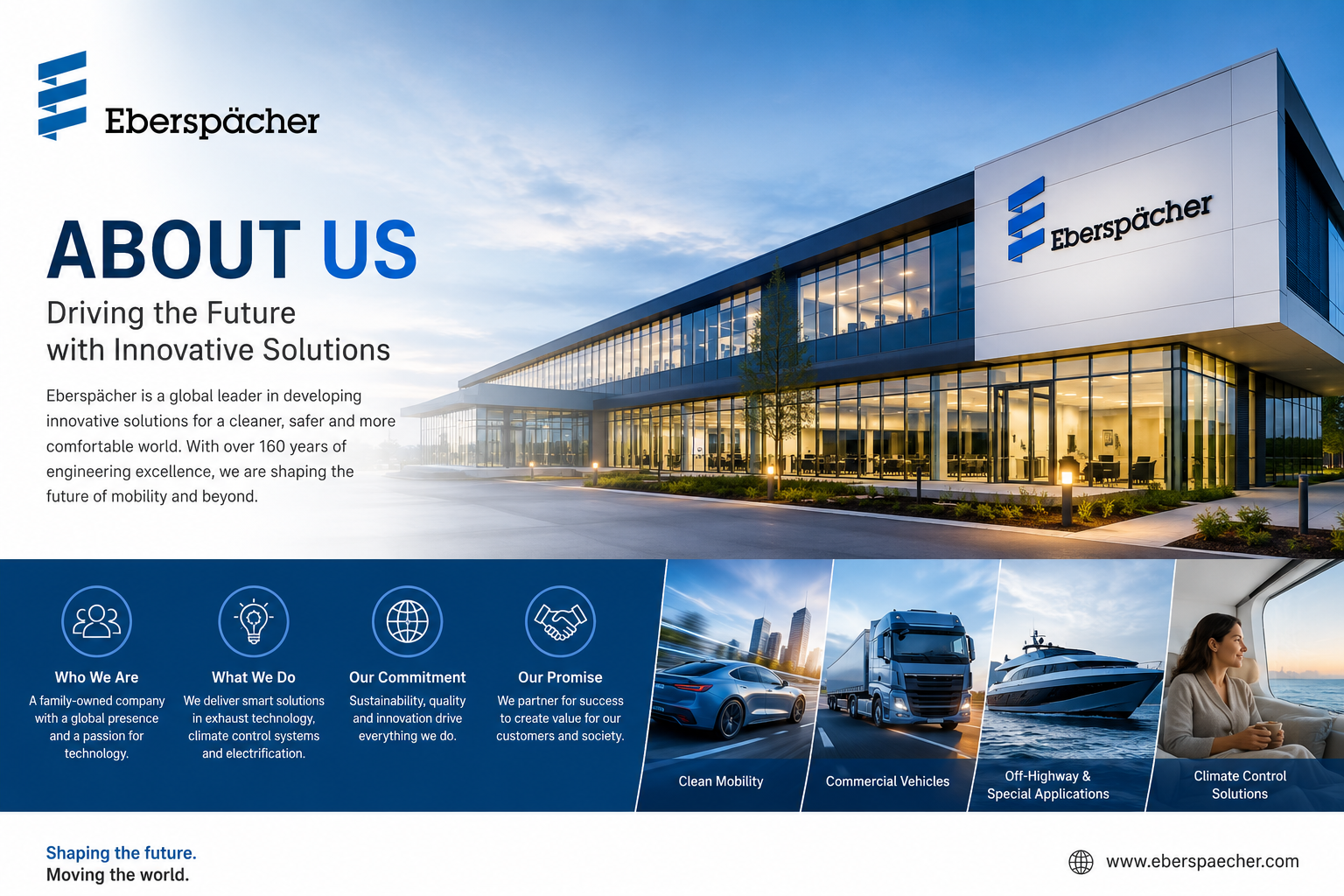
People searching for eberspaecher com about us are usually trying to understand the company behind Eberspächer: what it does, where it operates, who owns it, and how its technologies fit into the changing automotive industry.
Eberspächer is a German, family-owned technology group headquartered in Esslingen am Neckar. Founded in 1865, it has developed from a small metalworking business into an international automotive supplier specializing in exhaust technology, thermal management, vehicle electronics, and emerging clean-mobility technologies.
Eberspächer at a Glance
| Company Fact | Details |
|---|---|
| Company | Eberspächer Group |
| Legal entity | Eberspächer Gruppe GmbH & Co. KG |
| Founded | 1865 |
| Founder | Jakob Eberspächer |
| Headquarters | Esslingen am Neckar, Germany |
| Ownership | 100% family-owned |
| Employees | 10,374 worldwide |
| Global presence | Around 80 locations |
| 2025 consolidated revenue | €4.98 billion |
| 2025 net revenue* | €2.53 billion |
| Core areas | Exhaust technology, thermal management, automotive controls |
| Long-term focus | Clean mobility and technologies beyond automotive |
*Net revenue excludes transitory items. Figures reflect the company’s reported 2025 financial year.
What Is Eberspächer?
Eberspächer is primarily a technology developer and supplier serving the automotive industry and related mobility markets.
Its systems are designed to support three recurring needs in modern transportation: lower emissions, effective thermal management, and safe electrical control. The company supplies technologies for conventional combustion vehicles as well as hybrid and fully electric platforms.
That distinction matters. Eberspächer should not be viewed simply as an exhaust-parts manufacturer.
Its present-day portfolio stretches from exhaust-gas aftertreatment and vehicle heaters to battery-management electronics, high-voltage heating technologies, hydrogen-related applications, and other industrial solutions.
What Does Eberspächer Do?
Eberspächer organizes its established automotive activities around three major technology divisions.
1. Purem by Eberspächer: Exhaust Technology
Purem by Eberspächer represents the Group’s exhaust-technology activities.
Its expertise covers exhaust-gas aftertreatment and acoustic systems designed for passenger vehicles, commercial vehicles, construction machinery, and other applications.
The division is particularly relevant to manufacturers dealing with increasingly demanding emissions requirements.
Its engineering knowledge is also being transferred into newer fields. Eberspächer has highlighted applications involving hydrogen, fuel-cell systems and components, and even Direct Air Capture technology designed around removing carbon dioxide from ambient air.
2. Climate Control Systems
The Climate Control Systems division develops thermal-management products for vehicles with different powertrain technologies.
Its portfolio includes solutions for:
- Passenger cars
- Trucks
- Buses and coaches
- Recreational vehicles
- Special-purpose vehicles
- Combustion-powered vehicles
- Hybrid vehicles
- Fully electric vehicles
Heating and cooling are more important in electric vehicles than they may initially appear.
An EV cannot simply rely on waste heat from an internal combustion engine. Efficient thermal systems therefore help regulate the passenger cabin while also supporting components such as traction batteries.
Eberspächer develops electrical and fuel-operated heating technologies alongside broader climate-control systems for these applications.
3. Automotive Controls
Automotive Controls focuses on vehicle electronics.
The division’s expertise includes technologies for efficient and safe electrical-energy distribution and battery management.
This area becomes increasingly important as vehicles incorporate more electrical equipment, high-performance computing, advanced safety functions, and electrified powertrains.
Eberspächer therefore participates not only in the mechanical transformation of vehicles but also in their increasingly complex electrical architecture.
Eberspächer Business Areas Compared
| Area | Primary Purpose | Relevant Mobility Trends |
| Purem by Eberspächer | Exhaust aftertreatment and acoustic technologies | Cleaner combustion, hydrogen, industrial applications |
| Climate Control Systems | Heating, cooling and thermal management | Electric mobility, passenger comfort, battery temperature control |
| Automotive Controls | Vehicle electronics and power management | Electrification, safety, smart electrical systems |
Together, these areas explain why the company describes itself as a technology provider for the automotive market and beyond, rather than as a supplier focused on a single type of component.
The History Behind Eberspächer
The history of Eberspächer stretches back more than 160 years.
From a Small Workshop to Industrial Manufacturing
Jakob Eberspächer founded a tinsmith’s workshop in Esslingen in 1865.
Early products included practical metal goods, while the company later expanded into industrial applications and innovative metal-framed glazing systems.
By 1900, the business had established its first factory building. Its first foreign subsidiary followed in Vienna in 1913.
Entering the Automotive Industry
A defining change occurred during the 1930s.
Eberspächer began producing automotive silencers in 1931 and started developing vehicle heaters in 1933.
Series production of parking heaters followed in the 1950s. These developments created the foundations for two areas that remain important to the Group today: exhaust systems and vehicle thermal management.
Growth Into an International Supplier
During later decades, Eberspächer expanded internationally and added production facilities across Europe and other major automotive markets.
Its technology portfolio also evolved alongside regulatory and market changes, including increased demand for catalytic converters, emissions-control systems, electronics, and electrified-vehicle technology.
Today, Eberspächer operates around 80 locations worldwide, with more than two-thirds of its employees working outside Germany.
Where Does Eberspächer Operate?
Eberspächer has an international footprint spanning more than 30 countries.
Its current company factsheet reports around 80 locations and more than 40 production facilities, including on-site assembly operations.
The company’s operations extend across major regions including:
- Europe
- Asia
- North America
- South America
- Africa
This global structure allows Eberspächer to work close to vehicle manufacturers while adapting products and manufacturing capacity to regional automotive markets.
Who Owns Eberspächer?
Eberspächer remains 100% family-owned, an unusual characteristic for a company of its scale in the global automotive supply industry.
The business has remained connected to the founding family across generations rather than becoming a publicly traded corporation.
Its family ownership also influences how the company presents its long-term strategy. Eberspächer repeatedly emphasizes sustainable growth, innovation, responsibility, and the ability to plan beyond short-term market cycles.
Who Leads Eberspächer?
The current executive structure separates strategic shareholder leadership from overall operational responsibility.
Martin Peters serves as Chairman of the Executive Board and Managing Partner. He has been Managing Partner of the Eberspächer Group since 2001.
Jörg Steins serves as CEO of the Eberspächer Group and Purem by Eberspächer, carrying overall operational responsibility.
The Executive Board also includes:
- Stephan Knuppertz — Chief Financial Officer
- Uwe Johnen — Chief Transformation Officer
The company’s 2025 Annual Report lists this leadership structure as of April 2026.
How Large Is Eberspächer?
The latest reported figures provide useful context for the Group’s scale.
During the 2025 financial year, Eberspächer reported:
- €4,979.8 million consolidated revenue
- €2,531.3 million net revenue excluding transitory items
- 10,374 employees worldwide
Consolidated revenue declined from €5,333.2 million in the prior year, while adjusted net revenue fell from €2,731.7 million. The company attributed the environment partly to difficult automotive-market conditions and exchange-rate effects.
Why Gross and Net Revenue Can Look Very Different
This is an important detail that many basic company profiles miss.
Eberspächer publishes both consolidated or gross revenue and net revenue adjusted for transitory items. Consequently, seeing figures of roughly €5.0 billion and €2.5 billion for the same year does not mean one source is necessarily wrong.
They represent different accounting views of the business.
Eberspächer’s Strategy: Driving the Mobility of Tomorrow
The Group describes its long-term vision as “DRIVING THE MOBILITY OF TOMORROW.”
Its MOVE corporate strategy is structured around four broad pillars:
- Profitability and Growth
- Clean Mobility
- Smart Solutions
- Dedicated People
The strategy reflects a central challenge facing established automotive suppliers: maintaining competitive traditional businesses while developing technologies suited to electric, connected, and lower-carbon transportation.
Moving Beyond Traditional Automotive Components
One of the more significant developments for anyone researching eberspaecher com about us is the company’s effort to transfer established engineering capabilities into newer markets.
Recent areas highlighted by Eberspächer include:
Hydrogen Technologies
The company is developing solutions connected with hydrogen production, transportation, and use.
Its activities include components for fuel-cell systems and partnerships relating to technologies used in hydrogen production.
Energy Storage
Energy-storage applications represent another area where Eberspächer is attempting to apply automotive engineering capabilities outside its traditional markets.
The company’s 2025 financial reporting specifically highlighted partnerships intended to expand activity in new business areas, including energy storage.
Direct Air Capture
Purem by Eberspächer is also developing Direct Air Capture technology.
The concept applies engineering experience to systems intended to remove carbon dioxide directly from the atmosphere, demonstrating how exhaust-treatment expertise may potentially translate into broader environmental technologies.
Sustainability Goals at Eberspächer
Sustainability is incorporated into the Group’s MOVE strategy rather than being presented only as a separate environmental initiative.
Eberspächer has established two particularly clear climate targets:
- CO₂-neutral production globally by 2030
- CO₂-neutrality for the entire company by 2040
The company says its environmental approach includes energy efficiency, resource conservation, renewable electricity, and reductions across its broader emissions footprint.
These targets are important when assessing the company because its business operates on both sides of the mobility transition.
Eberspächer continues to serve combustion-based vehicles while simultaneously expanding technologies for electric vehicles, hydrogen applications, cleaner industrial processes, and other future-oriented markets.
Eberspächer as an Employer
With more than 10,000 employees worldwide, Eberspächer recruits across engineering, manufacturing, software, finance, sales, administration, and other professional disciplines.
Its careers information is organized for several groups, including:
- University students
- Graduates and early-career applicants
- Experienced professionals
- Managers
The company also emphasizes continuous employee development, vocational training, workplace health and safety, and international collaboration.
For technical candidates, the breadth of Eberspächer’s portfolio can be particularly relevant because career opportunities may span mechanical engineering, electronics, thermal systems, software, manufacturing, and emerging energy technologies.
Eberspächer’s Corporate Values
Eberspächer identifies three values intended to guide interactions across its global organization:
Trust
The company associates trust with a positive working culture and confidence in the motivation and honesty of employees.
Respect
Respect centers on valuing colleagues and treating people appropriately across different roles and backgrounds.
Tolerance
Tolerance reflects acceptance of different views, perspectives, cultures, and ways of thinking.
These principles support the company’s broader emphasis on international teams and diversity as contributors to innovation.
Is eberspaecher.com the Official Website?
Yes. eberspaecher.com is the corporate website associated with Eberspächer Gruppe GmbH & Co. KG.
The site’s legal imprint identifies the service provider as:
Eberspächer Gruppe GmbH & Co. KG
Eberspächerstraße 24
73730 Esslingen
Germany
The imprint also provides German commercial-register information and corporate contact details.
This makes the corporate website the most authoritative starting point for information about company figures, management, products, sustainability reports, careers, press releases, and legal information.
What Can You Find on eberspaecher.com?
Visitors researching the company can use different sections depending on their purpose.
Company Information
The Company area covers:
- Corporate profile
- Facts and figures
- Management
- Vision and strategy
- Company history
- Sustainability
Product and Technology Information
Dedicated sections explain the Group’s major technology areas, including climate-control systems, automotive controls, and exhaust technology.
Careers
Job seekers can explore career paths, employment opportunities, training, student programs, and information about working at Eberspächer.
Press and Newsroom
Journalists, investors, industry professionals, and researchers can find:
- Press releases
- Financial-year updates
- Innovation stories
- Company announcements
- Sustainability reporting
- Downloadable media materials
Using the appropriate section is often more reliable than relying on third-party company profiles that may contain outdated employee counts or financial figures.
Common Mistakes When Researching Eberspächer
Mistake 1: Treating It Only as an Exhaust Company
Exhaust technology remains important, but the company also has substantial activities in thermal management, electronics, e-mobility, hydrogen, and emerging industrial technologies.
Mistake 2: Confusing Purem With an Unrelated Company
Purem by Eberspächer is the brand used for the Group’s exhaust-technology division. It should not automatically be interpreted as an unrelated manufacturer.
Mistake 3: Comparing Revenue Figures Without Context
Check whether a source is reporting consolidated revenue or net revenue adjusted for transitory items. Mixing the two can create a misleading comparison.
Mistake 4: Using Old Employee or Revenue Figures
Automotive suppliers can change considerably from year to year. For current research, prioritize the latest annual report, facts-and-figures page, and official financial releases.
Mistake 5: Assuming Eberspächer Is Publicly Traded
Eberspächer is a privately held, 100% family-owned company rather than a publicly listed corporation.
Why Eberspächer Matters in the Mobility Industry
Eberspächer’s significance comes from its position between established automotive engineering and newer mobility technologies.
The company already possesses large-scale manufacturing, system-development experience, international customer relationships, and engineering expertise. Its challenge—and opportunity—is to redirect more of those capabilities toward growing technologies as vehicle markets move away from fossil-fuel dependence.
Three trends make the company particularly worth watching:
- Vehicle electrification increases demand for sophisticated thermal and electrical-management systems.
- Stricter emissions standards maintain the need for advanced exhaust aftertreatment in combustion and hybrid applications.
- Energy-transition technologies create opportunities to apply engineering knowledge in hydrogen, energy storage, and carbon-management systems.
This broader perspective provides a more accurate picture of Eberspächer than viewing the business solely through its historical automotive products.
Frequently Asked Questions
What is Eberspächer known for?
Eberspächer is known for automotive exhaust technology, thermal-management systems, vehicle electronics, and technologies supporting cleaner and more efficient mobility.
Where is Eberspächer headquartered?
The company is headquartered in Esslingen am Neckar, Germany.
When was Eberspächer founded?
Jakob Eberspächer founded the business in 1865, making the company more than 160 years old.
Is Eberspächer a German company?
Yes. Eberspächer originated in Germany and maintains its headquarters in Esslingen, although it now operates an international network across more than 30 countries.
Who owns Eberspächer?
Eberspächer is 100% family-owned.
How many people work for Eberspächer?
The company reported 10,374 employees worldwide for the 2025 financial year.
What was Eberspächer’s revenue in 2025?
The Group reported consolidated revenue of approximately €4.98 billion and net revenue excluding transitory items of approximately €2.53 billion.
Does Eberspächer make products for electric vehicles?
Yes. Its electric-mobility activities include thermal-management technologies, electric heating solutions, vehicle electronics, battery-management-related technologies, and electrical power-distribution systems.
What is Purem by Eberspächer?
Purem by Eberspächer is the Group’s exhaust-technology division, specializing in exhaust-gas aftertreatment, acoustic systems, and related clean-mobility technologies.
What are Eberspächer’s climate goals?
The company aims for CO₂-neutral production by 2030 and CO₂ neutrality across the entire company by 2040.
Conclusion
A search for eberspaecher com about us reveals much more than the profile of a traditional automotive supplier. Eberspächer is a 160-plus-year-old, family-owned German technology group with around 10,400 employees, a presence at roughly 80 global locations, and 2025 consolidated revenue of nearly €5 billion.
Its roots remain firmly connected to automotive engineering, but its direction is broader. Exhaust aftertreatment, electric-vehicle thermal management, vehicle electronics, hydrogen technologies, energy storage, and other emerging applications now form part of its effort to shape what the company calls the mobility of tomorrow. For customers, job seekers, researchers, and industry professionals, the official Eberspächer website remains the strongest source for understanding how this long-established German manufacturer is adapting to the next generation of mobility.


Anguage Taiwan Speak: Languages Used in Taiwan

Haypp Group Customer Experience: What Sets It Apart

adsy pw hb5: Meaning, Safety & SEO Guide
-

 Fashion9 years ago
These ’90s fashion trends are making a comeback in 2017
-
Entertainment9 years ago
The final 6 ‘Game of Thrones’ episodes might feel like a full season
-
Fashion9 years ago
According to Dior Couture, this taboo fashion accessory is back
-
Entertainment9 years ago
The old and New Edition cast comes together to perform
-
Sports9 years ago
Phillies’ Aaron Altherr makes mind-boggling barehanded play
-
Entertainment9 years ago
Disney’s live-action Aladdin finally finds its stars
-
Business9 years ago
Uber and Lyft are finally available in all of New York State
-
Sports9 years ago
Steph Curry finally got the contract he deserves from the Warriors