
news
Thomas Bankalter: The Real Daft Punk Story

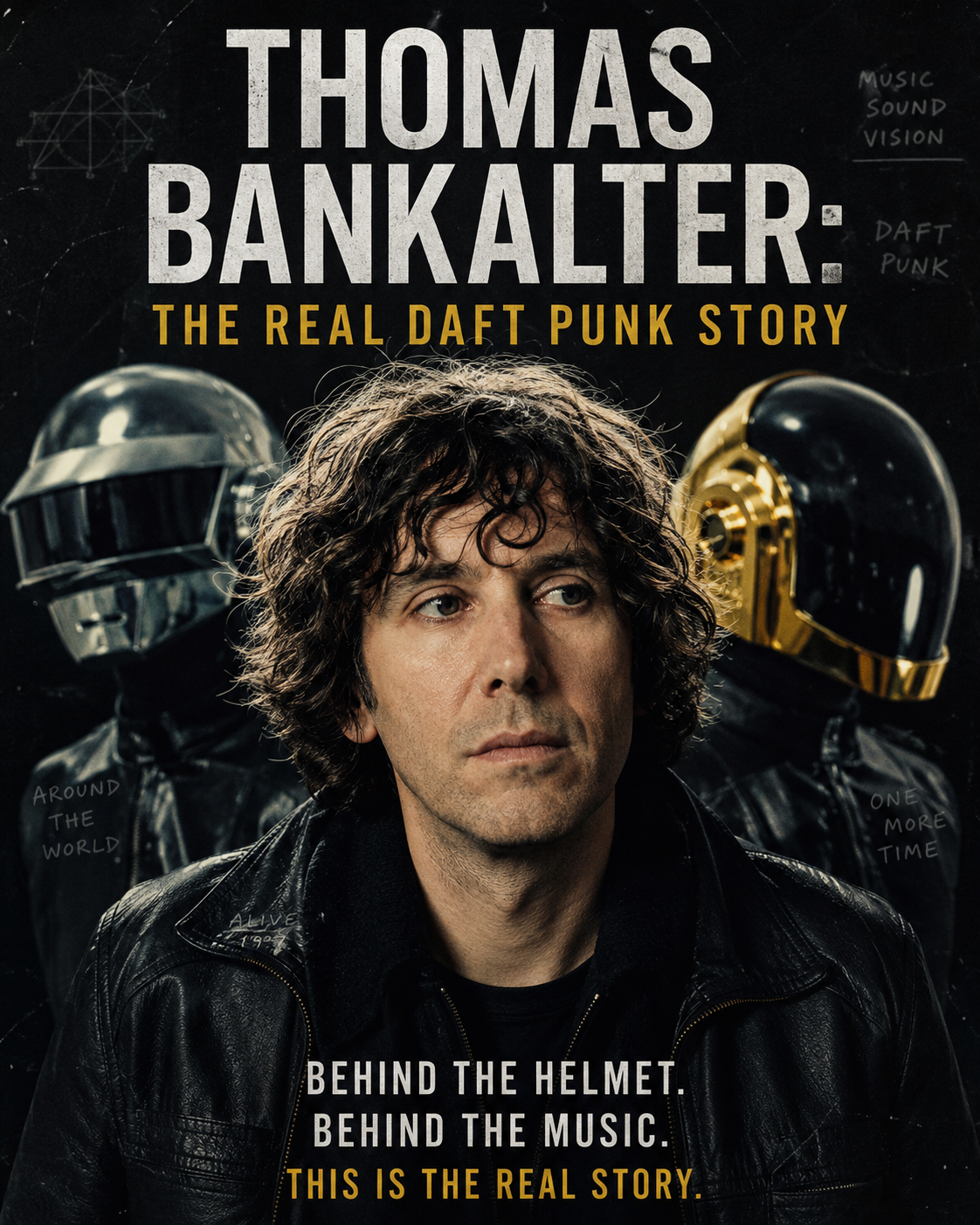
Thomas Bankalter is the name many people type when they are trying to find Thomas Bangalter, the French musician best known as one half of Daft Punk. The misspelling has become a search habit of its own, but the real story behind it leads to one of the most important creative figures in electronic music. This guide explains the correct identity, the career path, the music, the private image, and the newer orchestral work behind the name.
Quick Bio
| Feature | Details |
|---|---|
| Correct Name | Thomas Bangalter |
| Common Search Version | Thomas Bankalter |
| Date of Birth | 3 January 1975 |
| Origin | Paris, France |
| Primary Identity | French musician, producer, composer, DJ, and former Daft Punk member |
| Main Industry | Electronic music, French house, film scoring, ballet, and orchestral composition |
| Best Known For | Co-founding Daft Punk with Guy-Manuel de Homem-Christo |
| Important Side Projects | Stardust, Together, solo releases, Roulé label projects |
| Primary Use of the Keyword | Searchers use Thomas Bankalter to find information about Thomas Bangalter |
| Popular Applications | Biography searches, Daft Punk history, music credits, net worth queries, solo work, and pronunciation help |
| Major Career Shift | Moving from robot-era electronic music toward ballet, orchestra, film, and art projects |
Is Thomas Bankalter the Right Name?
Thomas Bankalter is not the correct spelling of the artist’s name. The correct name is Thomas Bangalter, and he is the French musician, producer, and composer who co-founded Daft Punk. The wrong spelling is common because many fans first hear the surname before seeing it written. Search engines now understand the mistake, but a serious article should always explain the difference early so readers know they have reached the right person.
This matters because Thomas Bangalter is not a minor celebrity attached to one viral song. He helped shape the sound and image of modern electronic music across three decades. When readers search Thomas Bankalter, they usually want a clear answer, not a page that repeats the misspelling without context. The strongest content should respect the search phrase while giving the correct identity with confidence.
Why the Misspelling Became So Common
The phrase Thomas Bankalter likely spread because Bangalter is an unusual surname for many English-speaking listeners. In speech, the middle consonant can sound unclear, especially when fans hear it in interviews, documentaries, podcasts, or short video clips. Once a wrong spelling appears in search suggestions, social captions, and copied articles, it starts to look normal. That is how Thomas Bankalter became a common route to the correct artist.
Daft Punk’s own mystery made the confusion stronger. For years, the duo were more visible as robot figures than as ordinary public personalities. Casual listeners often knew the helmets, the songs, and the videos before they knew the real names behind them. That gap created space for errors, and Thomas Bankalter became one of the most repeated examples.
The Correct Identity Behind the Search
Thomas Bangalter was born in Paris and grew up around music, performance, and studio culture. His father, Daniel Vangarde, was a songwriter and producer, while his mother, Thérèse Thoreux, worked in dance and choreography. That background did not make his career automatic, but it gave him early contact with rhythm, discipline, and performance. When people search Thomas Bankalter, they are really searching for this wider creative history.
Bangalter’s career is often reduced to Daft Punk, but that is only the largest chapter. He has worked as a producer, label founder, composer, DJ, film scorer, and stage music creator. He has moved between club music, pop craft, cinema, ballet, and art performance without turning his private life into a public brand. That range is the reason Thomas Bankalter remains such a valuable search topic for fans and publishers.
Early Life in a Musical Paris Home
Bangalter began learning piano as a child, and that early training shaped the way he later handled melody, timing, and repetition. He did not simply become a producer who relied on machines; he developed an ear for structure before he became known for electronic sound. That background helps explain why his later orchestral work did not come from nowhere. The same sense of movement appears in his dance records, film cues, and ballet scores.
His Paris upbringing also placed him near several artistic worlds at once. Disco, rock, cinema, club culture, and European classical ideas could all enter his creative life without needing to fit one lane. This is important for understanding why Thomas Bankalter is more than a misspelled celebrity query. Behind the search term is an artist who kept rebuilding his methods instead of staying fixed in one sound.
Meeting Guy-Manuel and the Darlin’ Turning Point
The partnership with Guy-Manuel de Homem-Christo began when the two met as students in Paris. Before Daft Punk, they played in a small rock project called Darlin’ with Laurent Brancowitz. A negative review described their sound with a phrase that later helped inspire the name Daft Punk. What looked like a small criticism became part of electronic music history.
That story matters because it shows how Bangalter and de Homem-Christo treated failure. They did not try to look polished at the start, and they did not chase a safe image. They turned a rough beginning into a new identity, then built a world around it. For anyone searching Thomas Bankalter, this is the real origin point of the Daft Punk myth.
Daft Punk and the Making of a New Electronic Language
Daft Punk formed in the early 1990s and arrived at a time when house, techno, disco, and pop were being remixed into new forms. Bangalter and de Homem-Christo were not the only artists in that movement, but they had a rare gift for making underground sound feel direct and memorable. Their work carried the energy of the club while also building a strong visual world. That mix helped them cross from dance floors into global culture.
The power of Daft Punk came from contrast. Their music often used loops, filters, vocoders, and mechanical repetition, yet the emotional effect could feel warm and human. The helmets made them look less personal, but the songs often carried nostalgia, joy, tension, or longing. That tension is one reason the Thomas Bankalter search still attracts people who want to know who was behind the machine.
Homework and the French House Breakthrough
Daft Punk’s debut album Homework helped push French house into wider international attention. Tracks such as “Da Funk” and “Around the World” gave listeners a sound that was simple on the surface but carefully built underneath. The production leaned into rhythm, compression, repetition, and small changes that made club music feel alive. Bangalter’s fingerprints were clear in the way simple parts could become hypnotic.
Homework also proved that electronic music did not need to copy rock-star rules to become culturally powerful. The duo could stay strange, controlled, and partly hidden while still reaching a mass audience. That choice shaped how later electronic acts thought about image, branding, live shows, and music videos. When people search Thomas Bankalter, they are often circling back to this breakthrough era without knowing the details.
Discovery, Robots and Global Pop Memory
Discovery pushed Daft Punk into a brighter, more emotional world. Songs such as “One More Time,” “Digital Love,” and “Harder, Better, Faster, Stronger” mixed dance music with pop hooks, cartoon futurism, and a strong sense of memory. The robot image became more central during this era, turning Bangalter and de Homem-Christo into figures that felt both hidden and instantly recognizable. It was not just a costume choice; it changed how people understood fame.
The genius of the robot era was that it protected the artists while expanding the art. The less the public saw of their everyday faces, the more attention went to the sound, the videos, the helmets, and the full world around the records. This also explains why Thomas Bankalter became a common typo. When the symbol is more famous than the surname, spelling mistakes become easier to repeat.
Stardust, Roulé and the Side Projects That Matter
Bangalter’s side projects are not footnotes. Stardust, the project with Alan Braxe and Benjamin Diamond, released “Music Sounds Better with You,” one of the defining tracks of French house. The song’s simple loop, vocal line, and emotional lift showed how a small idea could become a dance classic. For many fans, it remains one of the clearest examples of Bangalter’s gift for making repetition feel alive.
His Roulé label also matters because it shows the business and taste-making side of his career. Roulé became linked with a specific kind of filtered, sample-based French house sound that influenced DJs, producers, and collectors. The label gave Bangalter space outside Daft Punk, and it helped define the sound surrounding him in the late 1990s and early 2000s. A strong Thomas Bankalter article should cover this because it answers the searcher who wants more than the helmet story.
Film, Ballet and the Post-Daft Punk Chapter
After Daft Punk, Bangalter did not simply return as a nostalgia act. He moved deeper into scoring, ballet, and art performance, which showed a more formal side of his writing. This shift can surprise fans who mainly know him through “Get Lucky” or “Around the World.” Yet it makes sense when you look at his long interest in cinema, rhythm, movement, and controlled identity.
His film and stage work also changes the way people should read the Thomas Bankalter search. It is not only a search for a former Daft Punk member. It is now a search for a composer building a second public chapter after one of the most famous electronic acts in history. That gives the keyword more depth than a simple celebrity biography.
Mythologies and the Move Toward Orchestra
Mythologies marked a major turn because it placed Bangalter in the world of ballet and orchestra rather than club electronics. The project was created for choreography and built around movement, gesture, and dramatic shape. Instead of hiding behind the Daft Punk robot frame, Bangalter worked through acoustic instruments and long-form composition. That move gave critics and fans a new way to judge him.
The project also showed that his older skills were still present in a new form. Repetition, timing, tension, and release still mattered, but the tools were different. The shift from electronic production to orchestra did not erase his past. It made the Thomas Bankalter search richer because the answer now includes both dance music history and contemporary composition.
Daaaaaalí!, Chiroptera and Modern Art Work
Bangalter’s more recent work includes film and large-scale performance projects, including music connected to Daaaaaalí! and Chiroptera. These projects place him near filmmakers, choreographers, visual artists, dancers, and institutions rather than only clubs or festivals. That does not mean he has abandoned electronic culture. It means he is choosing settings where sound, movement, image, and space work together.
This stage of his career is important because it separates him from artists who only repeat their biggest formula. Bangalter could have lived forever on Daft Punk nostalgia, but he has instead taken quieter and stranger paths. The public may still type Thomas Bankalter by mistake, but the person they find is not stuck in the past. He is still building work that asks listeners to follow him into new rooms.
Privacy, Helmet Culture and Public Fascination
Bangalter’s private image is not an accident. Daft Punk used helmets and limited public exposure to keep the focus on the work rather than on ordinary celebrity behavior. That decision now feels even more unusual because many artists are expected to share constant personal updates. Bangalter’s silence became part of the story, but it also protected the music from being swallowed by gossip.
This privacy helps explain why Thomas Bankalter remains a search magnet. People want to know what is behind the helmet, yet part of the appeal is that not everything is available. Good content should not invent private details to satisfy curiosity. It should explain the known facts, the artistic choices, and the reason the mystery still works.
Awards, Recognition and Commercial Reach
Daft Punk’s commercial peak reached a new level with Random Access Memories and “Get Lucky.” That era brought major Grammy recognition and introduced the duo to listeners who may not have followed their earlier club records. It also proved that Bangalter and de Homem-Christo could win with a slower, more studio-based sound instead of following the louder dance trends of the time. Their success came from craft, patience, and a clear idea of what they wanted music to feel like.
Awards are useful, but they do not fully explain Bangalter’s importance. The deeper point is that he helped make electronic music feel like a complete artistic language. Production, costume, video, stage design, and silence all worked together. That complete identity is why the Thomas Bankalter keyword has lasting demand rather than being a short-lived typo.
Net Worth, Money Claims and What to Trust
Many pages about Thomas Bankalter focus on net worth, height, weight, and family details because those terms attract clicks. The problem is that some of those claims are estimates, not verified facts. Net worth figures in particular should be treated with care because they often come from entertainment sites that do not show clear financial records. A better article can mention that estimates exist without presenting them as confirmed truth.
The more reliable commercial story is easier to explain. Bangalter earned influence and likely wealth through recordings, publishing, production, touring history, licensing, film work, and the long tail of Daft Punk’s catalog. That does not require a fake exact number. Readers searching Thomas Bankalter deserve useful context, not inflated figures dressed as facts.
Search Variations and Commercial Angles
The keyword Thomas Bankalter connects to several search variations, including “Thomas Bangalter real name,” “Daft Punk Thomas,” “Thomas Bangalter wife,” “Thomas Bangalter net worth,” “Thomas Bangalter songs,” and “Thomas Bangalter pronunciation.” A strong page can answer these without turning into a messy list. The best structure starts with the spelling correction, then expands into biography, music, side projects, awards, privacy, and current work. This gives both casual fans and serious music readers a reason to stay.
There are also clear commercial angles around the name. Music fans may be looking for albums, vinyl releases, Daft Punk history, solo scores, streaming credits, documentaries, or collectible releases. Publishers can cover those angles without making the article feel like a sales page. The key is to keep Thomas Bankalter as the search doorway while making Thomas Bangalter the accurate subject.
Why Thomas Bankalter Still Matters
Thomas Bankalter still matters as a search phrase because it captures a real user mistake with high intent. Searchers are not looking for a different person; they are trying to reach the Daft Punk co-founder and understand his story. That makes the keyword useful for biography content, entertainment explainers, music history, and fan education. The page that wins should answer the typo quickly, then provide more value than a basic profile.
The person behind the search matters even more. Bangalter helped change how electronic music sounds, looks, and behaves in public. He showed that anonymity can create stronger identity when it is tied to serious creative control. That is why a misspelled name can still lead to a meaningful cultural story.
3. CONCLUSION
- Thomas Bankalter is a common misspelling, and the correct name is Thomas Bangalter.
- The search term should be answered directly before moving into Daft Punk history, solo work, and current projects.
- Bangalter’s career matters because it connects French house, global pop, film scoring, ballet, and art performance.
- Net worth and private-life claims should be handled carefully because many numbers online are estimates, not confirmed records.
- The strongest page on this topic should use the misspelled keyword naturally while giving readers the accurate story behind the artist.
4. FAQs
Is Thomas Bankalter the real name?
Thomas Bankalter is not the real name. The correct name is Thomas Bangalter, the French musician, producer, and composer best known as one half of Daft Punk. The misspelling is common because many people hear the surname before they see it written. A useful answer should correct the spelling while still helping the reader find the person they meant.
Who is Thomas Bangalter?
Thomas Bangalter is a French musician, producer, DJ, and composer who co-founded Daft Punk with Guy-Manuel de Homem-Christo. He is also linked to Stardust, Together, solo releases, film music, ballet, and large-scale art projects. His work helped bring French house and electronic music into wider global culture. People searching Thomas Bankalter are usually trying to find this same artist.
Why do people search Thomas Bankalter instead of Thomas Bangalter?
People search Thomas Bankalter because the surname Bangalter can be hard to catch by ear, especially for English-speaking fans. The robot image of Daft Punk also made the members’ real names less visible than the helmets and songs. When misspellings appear online often enough, they spread through search suggestions, captions, and copied content. That is why the wrong version remains common.
What is Thomas Bangalter doing after Daft Punk?
After Daft Punk ended, Thomas Bangalter moved further into orchestral, ballet, film, and performance-based work. Mythologies showed his interest in large-scale composition for dance, while later projects connected him with film and contemporary art. This does not erase his electronic past, but it expands how listeners understand him. The Thomas Bankalter search now points to both Daft Punk history and a new creative chapter.

Sehmeres is an uncommon search term that creates curiosity because its meaning is not immediately clear. People searching for sehmeres are usually looking for identification, explanation, or context rather than a simple definition. Current search results do not show a single universally accepted meaning, making careful investigation more important than guessing.
This guide explores what sehmeres may represent, why unusual keywords appear online, how to research them correctly, and what mistakes to avoid when trying to understand unfamiliar terms.
Sehmeres Quick Facts
| Question | Answer |
|---|---|
| Is sehmeres a common dictionary word? | No widely recognized standard definition is currently established. |
| Does sehmeres have one confirmed meaning? | Not from available evidence; context is required. |
| Could sehmeres be a typo? | Yes, this is one possible explanation. |
| Could it be a name, username, or brand? | Yes, unusual terms are often created for digital identities. |
| Best way to understand it | Find the original source where the term appeared. |
What Does Sehmeres Mean?
The exact meaning of sehmeres cannot be confirmed without additional context. Unlike established words that have dictionary entries and consistent usage, sehmeres appears to be a rare or context-dependent term.
When a search query contains an unusual word, there are several possibilities:
- It may be a spelling mistake.
- It may be a username or online identity.
- It may be a new brand or project name.
- It may be a transliterated word from another language.
- It may come from incorrectly scanned or converted text.
A reliable explanation should separate confirmed information from assumptions.
Why Is Sehmeres Difficult to Define?
Limited Online Usage
Common words usually have many independent references, including dictionaries, articles, academic sources, and everyday examples.
Rare terms like sehmeres often lack these signals. When search information is limited, a single webpage should not automatically be considered authoritative.
Possible Digital or Text-Recognition Errors
Some unusual search terms appear because of errors in digital processing.
Examples include:
- Optical character recognition mistakes from scanned documents.
- Incorrect subtitles in videos.
- Automatic translations.
- Typing errors.
- Autocorrect changes.
A strange spelling does not always represent a real standalone word.
Possible Explanations for Sehmeres
1. Sehmeres Could Be a Misspelling
One of the most common reasons for unusual searches is a simple spelling variation.
A person may have:
- Heard a word but never seen it written.
- Copied text incorrectly.
- Typed letters in the wrong order.
- Used a different spelling from another language.
The correct approach is to examine where the word was found before deciding what it means.
2. Sehmeres Could Be a Username or Online Name
Modern internet culture creates thousands of unique names every day.
A term like sehmeres may function as:
- A social media handle.
- A gaming identity.
- A creator name.
- A community nickname.
- A personal brand.
If the term appears after an “@” symbol or inside a profile link, it is more likely to represent an identity rather than a traditional word.
3. Sehmeres Could Be a Brand or Project Name
Businesses and digital products often use invented names.
A company name does not always need a dictionary meaning. Many brands choose unique combinations of letters to create a memorable identity.
Look for surrounding words such as:
- Official website
- App
- Download
- Login
- Pricing
- Services
- Store
These clues can reveal whether sehmeres refers to a product or organization.
4. Sehmeres May Be Related to Another Language
Some words change significantly when written using the Latin alphabet.
Transliteration can create multiple spellings for the same original term. A word from Arabic, Persian, Urdu, Turkish, or another language may appear differently depending on pronunciation and regional spelling.
Without knowing the source language, assigning a definite meaning can lead to incorrect conclusions.
How to Find the Real Meaning of Sehmeres
Step 1: Check Where You Found the Word
The source provides valuable clues.
Ask:
- Was it on a website?
- Did it appear in a video?
- Was it part of a username?
- Did it come from a document or image?
- Was it mentioned in a conversation?
Context often solves what a dictionary cannot.
Step 2: Search More Than the Single Word
Instead of searching only:
sehmeres
try combinations such as:
"sehmeres" meaning"sehmeres" website"sehmeres" username"sehmeres" app"sehmeres" + the nearby word
Adding context improves accuracy.
Step 3: Examine Spelling and Capitalization
Small details matter.
Compare:
- sehmeres — could be a general search term.
- Sehmeres — could suggest a name, company, or title.
Capitalization, punctuation, and surrounding text can change interpretation.
Common Mistakes When Researching Sehmeres
Creating a Meaning Without Evidence
A common mistake is inventing a definition simply because a keyword is unfamiliar.
Good research accepts uncertainty when proof is unavailable.
Trusting the First Search Result
Search rankings do not always equal accuracy.
For rare keywords, evaluate:
- Source credibility.
- Supporting evidence.
- Original references.
- Transparency about uncertainty.
Confusing Similar-Looking Words
Words that look alike are not necessarily connected.
A few shared letters do not prove a relationship between terms. Always verify the origin before linking meanings.
SEO Insights: Why Sehmeres Is an Interesting Keyword
From an SEO perspective, sehmeres represents a discovery-focused search intent.
The searcher is likely asking:
- “What is this?”
- “Where did this term come from?”
- “Is this a person, brand, or concept?”
- “Did I spell it correctly?”
A helpful page should not force a false definition. Instead, it should provide a structured investigation that helps readers reach the correct answer.
This approach supports trust because it prioritizes accuracy, evidence, and user satisfaction.
Frequently Asked Questions About Sehmeres
Is sehmeres a real word?
Sehmeres appears to be a real search term, but it does not currently have a widely recognized universal definition.
Is sehmeres a name?
It could be. Unusual spellings are often used for usernames, brands, characters, or personal identities.
Is sehmeres a typo?
Possibly. The intended word may depend on where the term was originally seen.
How can I discover what sehmeres means?
Find the original source, examine nearby words, check spelling variations, and look for reliable references.
Should I trust websites that define sehmeres?
Only if they provide evidence. A strong explanation should show how the meaning was verified rather than simply repeating unsupported claims.
Final Conclusion
Sehmeres remains an unusual and context-dependent keyword rather than a term with one confirmed public meaning. The most effective way to understand sehmeres is to investigate its source, surrounding information, and possible origins instead of accepting unsupported definitions.
When dealing with rare search terms, accuracy matters more than certainty. By checking context and verifying evidence, you can discover whether sehmeres refers to a name, typo, brand, translation, or something else entirely.
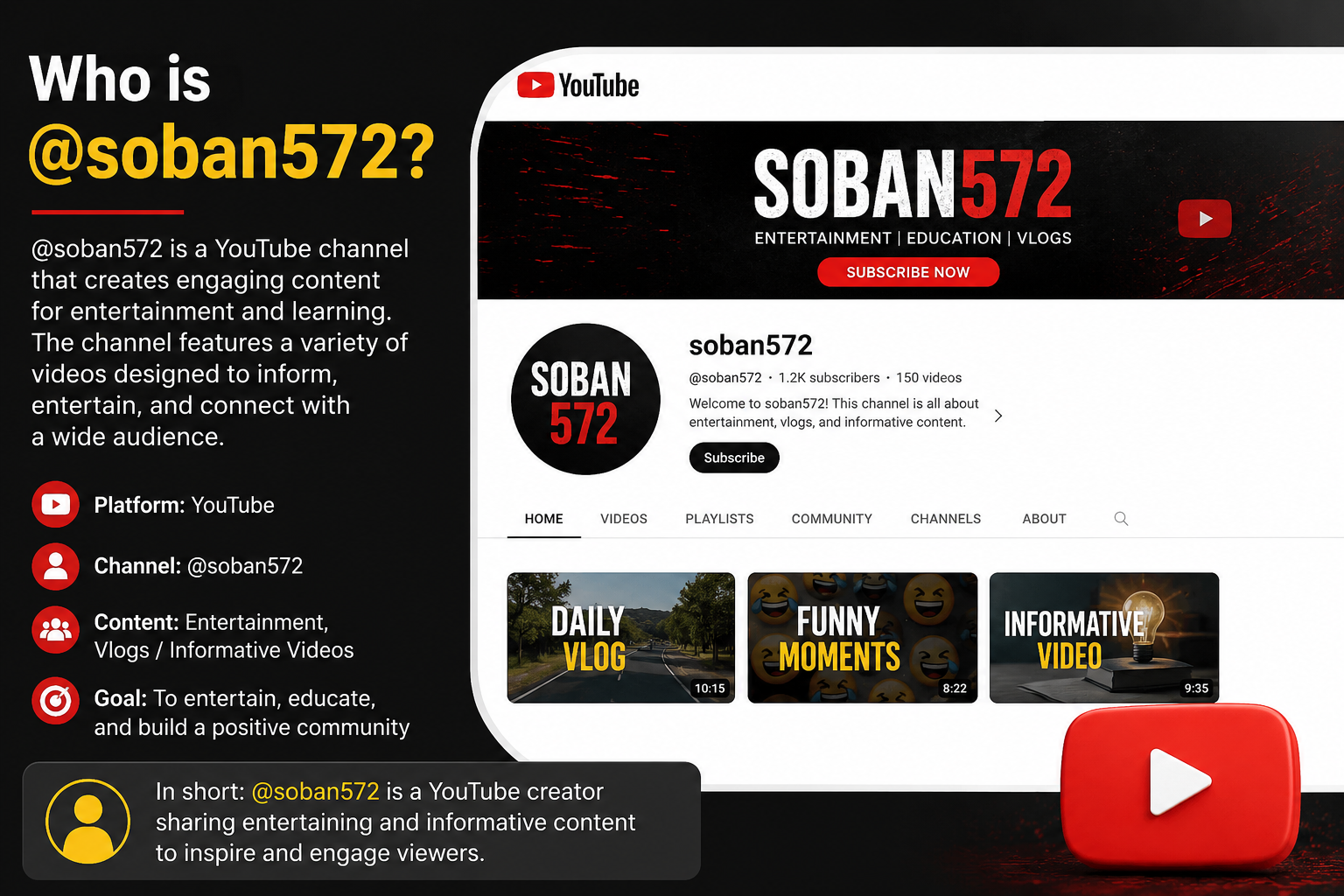
If you are searching for who is www.youtube.com/@soban572, you are likely trying to identify the person or creator behind the YouTube handle @soban572 and understand what they do online. Public search results provide limited direct information about the YouTube channel, so it is important to separate verifiable facts from assumptions.
What Is @soban572?
@soban572 is a YouTube handle that identifies a specific channel or creator on YouTube. A YouTube handle is a unique identifier that can be used to find and mention a channel.
However, the handle itself does not necessarily reveal the creator’s full name, profession, location, or background. Those details should only be attributed to the account owner when they are publicly confirmed through reliable sources.
Who Is Behind www.youtube.com/@soban572?
At present, publicly indexed search results do not provide enough reliable information to confidently establish the real-world identity of the person behind www.youtube.com/@soban572.
There is, however, a potentially relevant public reference to the username @Soban572 on Freelancer, where an account associated with Pakistan submitted a proposal for a website-design project.
This may be the same person as the YouTube creator, but there is not enough evidence to state that they are definitely the same individual.
Why the distinction matters
Online usernames can be shared or reused by different people. A matching username alone is not proof of identity.
For an accurate profile, look for information that connects the accounts directly, such as:
- A YouTube channel description linking to the person’s professional profile
- Matching social-media accounts
- A personal website listed on both profiles
- Consistent name and biography information
- Videos in which the creator identifies themselves
What Can You Learn From the YouTube Channel?
If the channel is publicly accessible, the most useful information to examine includes:
- Channel name — The displayed name may be different from the handle.
- About section — This can reveal the creator’s stated interests or profession.
- Video titles — A useful indicator of the channel’s main subject.
- Upload history — Helps establish whether the account is active.
- Featured links — These can connect the channel to other verified profiles.
- Audience engagement — Comments and recurring topics may provide additional context.
These details are more reliable than trying to identify someone solely from a username.
Is @soban572 a Freelancer or Web Designer?
There is a public Freelancer listing showing @Soban572 responding to a website-design project and describing their skills as matching the project requirements.
That provides evidence that an account using this username has presented itself in a web-design/freelancing context.
Nevertheless, it would be inaccurate to claim that this definitively identifies the owner of the YouTube channel unless the two profiles can be directly connected.
How to Verify the Creator
If you want to determine who www.youtube.com/@soban572 actually belongs to, use this verification process:
1. Check the YouTube About page
Look for a real name, business name, location, website, or social links voluntarily provided by the creator.
2. Compare external profiles
Search the exact handle on professional and social platforms. Pay particular attention to profile photos, biographies, websites, and linked accounts.
3. Check older videos
Older uploads can reveal the creator’s niche, professional interests, or publicly stated identity.
4. Look for cross-links
The strongest evidence is when the YouTube channel itself links to another account—or another account explicitly links back to the YouTube channel.
5. Avoid unsupported identity claims
Do not assume that a username, country, photograph, or similar profile proves that two accounts belong to the same person.
Quick Facts About @soban572
| Detail | What can currently be established |
|---|---|
| Platform | YouTube |
| Handle | @soban572 |
| Channel URL | www.youtube.com/@soban572 |
| Creator’s verified real name | Not established from the available public results |
| Public professional reference | A Freelancer profile using @Soban572 appears in search results |
| Possible profession | Web design/freelancing context is publicly associated with the matching username |
| Confirmed connection between profiles | Not established |
Why Search Results May Be Limited
Smaller or newer YouTube channels may have little information indexed outside YouTube. Search engines can also return unrelated pages when a username is relatively uncommon.
For that reason, the YouTube channel’s own public information should be treated as the primary source when determining its identity and purpose.
Final Verdict: Who Is www.youtube.com/@soban572?
So, who is www.youtube.com/@soban572? The account is a YouTube channel identified by the handle @soban572, but the available public evidence is not sufficient to confidently identify its owner by full name.
A matching @Soban572 username appears in public Freelancer search results in connection with website-design work, including a profile associated with Pakistan. However, this should be considered a possible connection rather than confirmed identity unless the YouTube account itself provides additional verification.
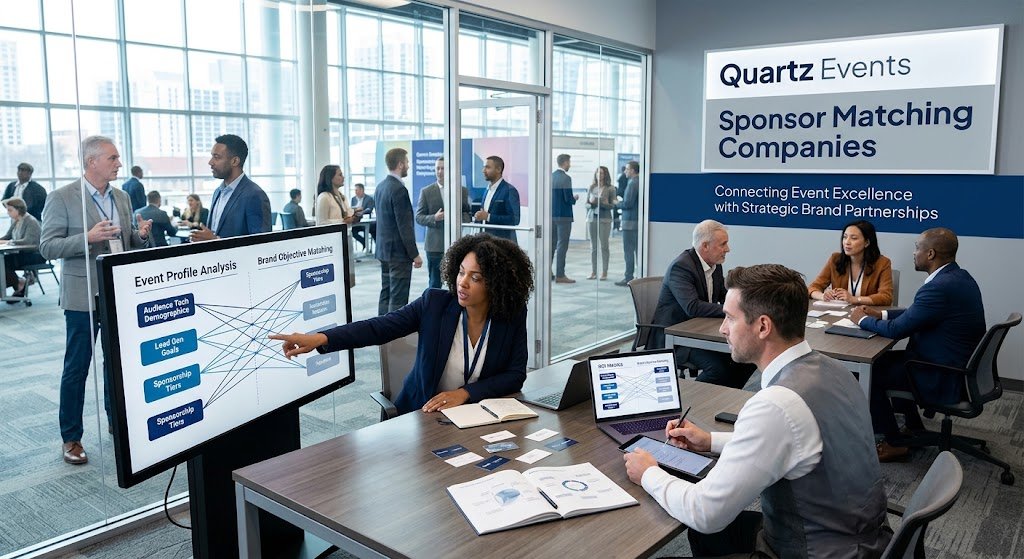
The keyword quartz events sponsor matching companies indicates a commercial investigation and guide-focused search intent. Users are likely looking for platforms, agencies, or strategies that help match Quartz events with relevant sponsors rather than simply learning what event sponsorship means.
They want practical answers:
- Which companies can help find sponsorship opportunities?
- How does sponsor-event matching work?
- What makes a sponsor partnership successful?
- How can organizers improve sponsorship revenue?
- What should brands evaluate before investing in an event?
A valuable resource must go beyond definitions and explain the decision-making process behind successful sponsor matching.
Quick Facts: Quartz Events Sponsor Matching Companies
| Factor | Key Insight |
|---|---|
| Primary purpose | Connect events with brands seeking targeted sponsorship opportunities |
| Best users | Event organizers, conference producers, associations, and marketing teams |
| Main benefit | Faster identification of relevant sponsors |
| Success driver | Strong alignment between audience, brand goals, and event objectives |
| Common mistake | Choosing sponsors based only on budget instead of strategic fit |
What Are Quartz Events Sponsor Matching Companies?
Quartz events sponsor matching companies are organizations, platforms, or service providers that help identify connections between event organizers and potential sponsors.
These companies use audience data, industry relationships, sponsorship marketplaces, and partnership strategies to create stronger matches between events and brands.
The goal is not simply finding any sponsor. The goal is finding sponsors that benefit from reaching a specific audience while providing meaningful value to attendees.
A successful match considers:
- Event audience demographics
- Brand objectives
- Industry relevance
- Sponsorship budget
- Marketing goals
- Long-term partnership potential
How Sponsor Matching Works for Quartz Events
1. Event Profile Development
The process begins by creating a detailed event profile.
Professional sponsor matching companies typically analyze:
- Event theme and industry focus
- Expected attendance
- Audience purchasing power
- Geographic reach
- Digital engagement opportunities
- Media exposure potential
A clearly defined event profile makes it easier to attract sponsors that see measurable business value.
2. Sponsor Identification and Research
Sponsor matching providers research companies that align with the event’s audience and objectives.
Strong matches often come from businesses looking to:
- Increase brand awareness
- Generate qualified leads
- Enter new markets
- Build industry authority
- Connect with decision-makers
For example, a technology conference may attract software companies, cybersecurity firms, cloud providers, or professional service organizations because the audience directly supports their marketing goals.
3. Partnership Evaluation
Not every interested company is a good sponsor.
Professional matching requires evaluating:
| Evaluation Area | Important Questions |
|---|---|
| Audience fit | Does the sponsor want to reach this audience? |
| Brand alignment | Do both organizations share compatible values? |
| Activation potential | Can the sponsor create meaningful attendee experiences? |
| Financial capability | Can the company support the sponsorship level required? |
| Long-term value | Could this become an ongoing partnership? |
Why Companies Use Quartz Events Sponsor Matching Companies
Faster Access to Qualified Sponsors
Finding sponsors manually can require months of outreach, research, and negotiation.
Matching companies reduce this workload by providing:
- Existing brand relationships
- Industry databases
- Sponsorship expertise
- Partnership recommendations
This allows event teams to focus more on event execution.
Better Sponsorship ROI
A sponsor relationship succeeds when both sides receive measurable value.
Matching specialists help improve ROI by connecting events with companies that already have a reason to participate.
Benefits include:
- Higher-quality sponsorship conversations
- Better audience relevance
- Increased renewal opportunities
- More effective sponsorship packages
Professional Sponsorship Strategy
Many events fail to maximize sponsorship revenue because they sell packages instead of solutions.
Experienced matching companies help reposition sponsorship as a business partnership.
Instead of offering:
“Logo placement on event materials”
A stronger approach becomes:
“Access to 5,000 industry professionals through targeted networking, thought leadership, and digital engagement opportunities.”
How to Choose the Right Sponsor Matching Company
Evaluate Industry Experience
The best sponsor matching provider understands your event category.
Look for experience in:
- Conferences
- Trade shows
- Corporate events
- Virtual events
- Industry summits
- Community events
A provider with relevant experience will understand sponsor expectations and market pricing.
Review Their Matching Process
Ask potential providers:
- How do they identify sponsors?
- What data do they analyze?
- How do they measure compatibility?
- Do they provide outreach support?
- How do they report results?
A transparent process usually indicates stronger expertise.
Check Their Network Quality
A large contact list does not automatically create valuable partnerships.
Quality matters more than quantity.
A strong sponsor matching company should have:
- Relevant brand relationships
- Industry-specific connections
- Decision-maker access
- Proven partnership outcomes
Common Mistakes When Finding Event Sponsors
Choosing Sponsors Based Only on Budget
A company willing to pay more is not always the best partner.
Poor alignment can create:
- Low attendee engagement
- Weak brand perception
- Difficult renewals
Strategic fit should come before sponsorship size.
Creating Generic Sponsorship Packages
Sponsors increasingly expect customized opportunities.
Avoid one-size-fits-all packages.
Instead, develop options around:
- Audience engagement
- Content partnerships
- Product demonstrations
- Networking experiences
- Digital visibility
Ignoring Post-Event Value
Many organizers focus only on securing sponsorship money.
Strong partnerships continue after the event through:
- Performance reports
- Lead summaries
- Audience insights
- Renewal discussions
Post-event measurement is often the difference between a one-time sponsor and a long-term partner.
Advanced Strategies for Better Sponsor Matching Results
Use Audience Data as Your Competitive Advantage
Sponsors want evidence that an event reaches valuable customers.
Collect and present:
- Registration demographics
- Attendee job titles
- Industry segments
- Engagement statistics
- Previous event performance
Better data creates stronger sponsorship conversations.
Build Tiered Partnership Opportunities
Modern sponsorship models should offer flexibility.
Examples include:
Premium Partnerships
Designed for major sponsors seeking maximum visibility.
Includes:
- Keynote opportunities
- Branding ownership
- Executive networking access
- Exclusive activations
Growth Partnerships
Suitable for companies testing event sponsorship.
Includes:
- Booth presence
- Content participation
- Lead generation opportunities
Community Partnerships
Designed for smaller organizations.
Includes:
- Digital visibility
- Networking access
- Supporting sponsorship recognition
Focus on Long-Term Sponsor Relationships
The strongest event sponsorship programs are relationship-driven.
Successful organizers maintain communication throughout the year through:
- Industry updates
- Sponsor performance reviews
- Early renewal discussions
- New collaboration ideas
Quartz Events Sponsor Matching Companies vs Traditional Sponsor Outreach
| Approach | Sponsor Matching Companies | Traditional Outreach |
|---|---|---|
| Research time | Lower | Higher |
| Access to contacts | Often stronger | Depends on internal network |
| Personalization | More strategic | Often inconsistent |
| Scalability | Higher | Limited |
| Expertise | Specialized | Depends on team experience |
Questions to Ask Before Hiring a Sponsor Matching Company
Before choosing a provider, ask:
- What industries do you specialize in?
- How do you determine sponsor-event compatibility?
- What results have you achieved for similar events?
- How do you measure sponsorship success?
- Do you support negotiation and partnership development?
These questions help separate experienced providers from basic lead-generation services.
The Future of Event Sponsor Matching
Sponsor matching is becoming increasingly data-driven.
Future-focused companies are using:
- Audience analytics
- Artificial intelligence-based recommendations
- Digital engagement tracking
- Predictive partnership models
The strongest sponsor relationships will come from deeper personalization rather than simple exposure-based deals.
Brands want meaningful connections with audiences, and events need partners that improve attendee experiences.
Final Thoughts on Quartz Events Sponsor Matching Companies
Finding the right sponsors requires more than sending proposals to random companies. The best quartz events sponsor matching companies help create strategic partnerships where events gain financial support and sponsors achieve measurable marketing outcomes.
By focusing on audience alignment, data-driven decisions, customized sponsorship packages, and long-term relationships, event organizers can build partnerships that deliver lasting value for everyone involved.


MyGreenBucks Net Jones: What’s Verified, What Isn’t

andy ham radio linux: Complete Setup Guide (2026)

aiostream apk: Android Setup, Safety & Best Options
-

 Fashion9 years ago
These ’90s fashion trends are making a comeback in 2017
-
Entertainment9 years ago
The final 6 ‘Game of Thrones’ episodes might feel like a full season
-
Fashion9 years ago
According to Dior Couture, this taboo fashion accessory is back
-
Entertainment9 years ago
The old and New Edition cast comes together to perform
-
Sports9 years ago
Phillies’ Aaron Altherr makes mind-boggling barehanded play
-
Business9 years ago
The 9 worst mistakes you can ever make at work
-
Entertainment9 years ago
Disney’s live-action Aladdin finally finds its stars
-
Business9 years ago
Uber and Lyft are finally available in all of New York State